
Clutter accumulates faster than most homeowners realize, turning organized spaces into sources of daily stress and frustration. When you can't find your keys, bills pile up on the counter, or closets overflow, household management feels overwhelming rather than effortless. This article delivers practical, actionable organization tips designed specifically for busy homeowners who want to reclaim control of their living spaces without investing endless hours or money. You'll learn proven decluttering methods, efficient organizing systems, smart storage strategies, and sustainable maintenance habits that transform chaotic homes into calm, functional environments that support your lifestyle and reduce daily stress.
Table of Contents
- Key takeaways
- Start with decluttering: the 4-box method
- Organize efficiently: follow a 5-step system
- Maximize usability: focus on high-touch zones and smart storage
- Sustain your space: daily maintenance habits and avoiding common pitfalls
- Explore smart home management with The Simple Service App
- Frequently asked questions
Key Takeaways
| Point | Details |
|---|---|
| Declutter first | Starting with the four box method reduces decision fatigue and prevents buying unnecessary storage by sorting items into Keep Donate Trash and Relocate. |
| Four Box Method | Use Keep Donate Trash Relocate to decide what stays, what goes, and where items should move. |
| Five Step System | After decluttering, group like items, assign a home near the point of use, contain with clear boundaries, and commit to daily five minute maintenance. |
| Smart storage tools | Use slim hangers and clear bins for space efficiency and quick visibility. |
Start with decluttering: the 4-box method
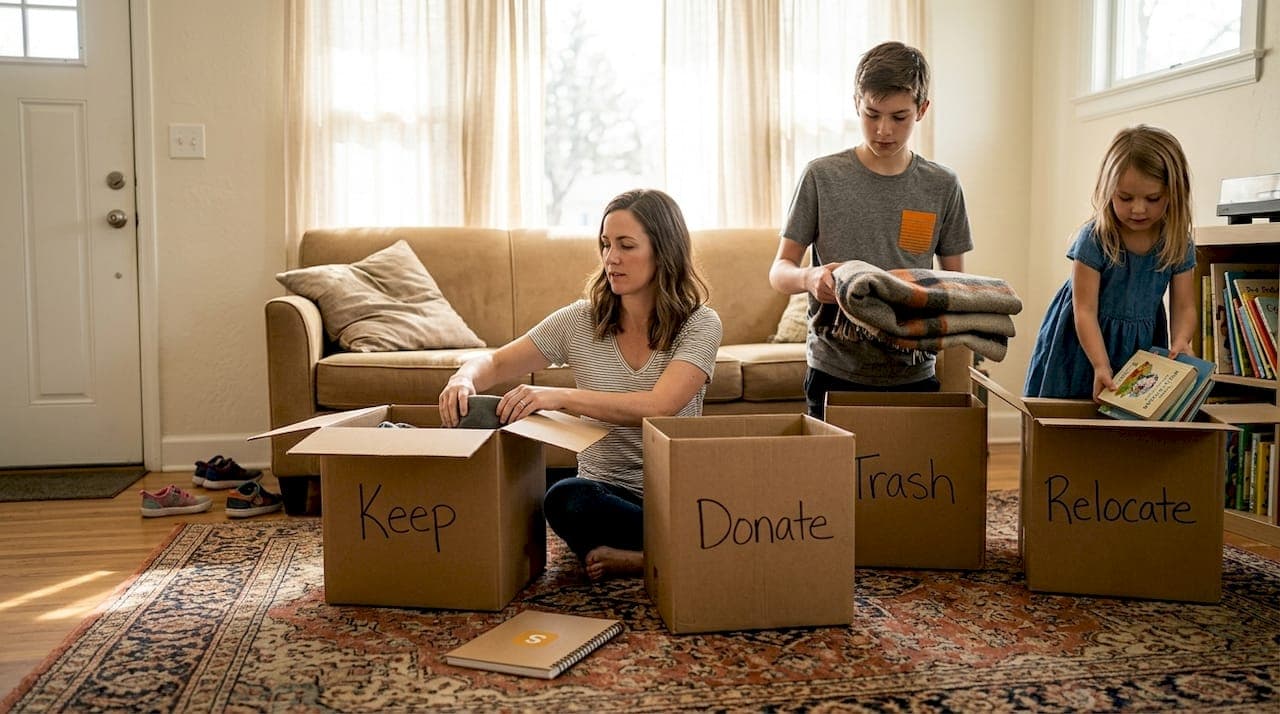
Organization without decluttering is just rearranging chaos. Declutter first using the 4-Box Method (Keep, Donate, Trash, Relocate) before organizing any space to eliminate decision fatigue and prevent buying unnecessary storage. This proven approach divides every item into four clear categories, removing the paralysis that stops most homeowners from making progress.
Start with a single room or zone rather than attempting your entire house. Kitchens typically require 3 to 4 hours for thorough decluttering, while bathrooms take 30 to 45 minutes. Living rooms fall somewhere between, depending on accumulated items. Set realistic time blocks and commit to finishing one complete space before moving to the next.
The four boxes work like this:
- Keep: Items you use regularly or genuinely love that earn their space in your home
- Donate: Functional items in good condition that no longer serve your household but could help others
- Trash: Broken, expired, or unusable items that belong in the garbage or recycling
- Relocate: Items that belong in different rooms or spaces within your home
Avoid the common trap of purchasing bins, baskets, or organizing systems before decluttering. You cannot accurately assess your storage needs until you know exactly what you're keeping. Premature storage purchases waste money and often create more clutter.
Pro Tip: Set a timer for 25-minute focused decluttering sessions followed by 5-minute breaks. This rhythm maintains energy and prevents the decision fatigue that derails longer sessions. Your brain makes better keep-or-donate choices when fresh.
"The secret to getting ahead is getting started. The secret to getting started is breaking your complex overwhelming tasks into small manageable tasks, and then starting on the first one."
For comprehensive room-by-room guidance, explore this detailed home decluttering guide that breaks down timing and strategies for every space in your house.
Organize efficiently: follow a 5-step system
Once decluttering reveals what you're actually keeping, implement a systematic organization approach that creates lasting order. Follow a 5-Step System: 1. Declutter, 2. Group like with like, 3. Assign a home near point of use, 4. Contain with boundaries (clear bins), 5. Daily maintenance (5-min reset). This framework transforms random storage into intentional systems that support your daily routines.
Grouping similar items together is fundamental. Gather all batteries in one container, all cleaning supplies in one cabinet, all craft materials in one zone. This simple principle eliminates the frustration of hunting through multiple locations for items you know you own. When everything has a category, finding and returning items becomes automatic.
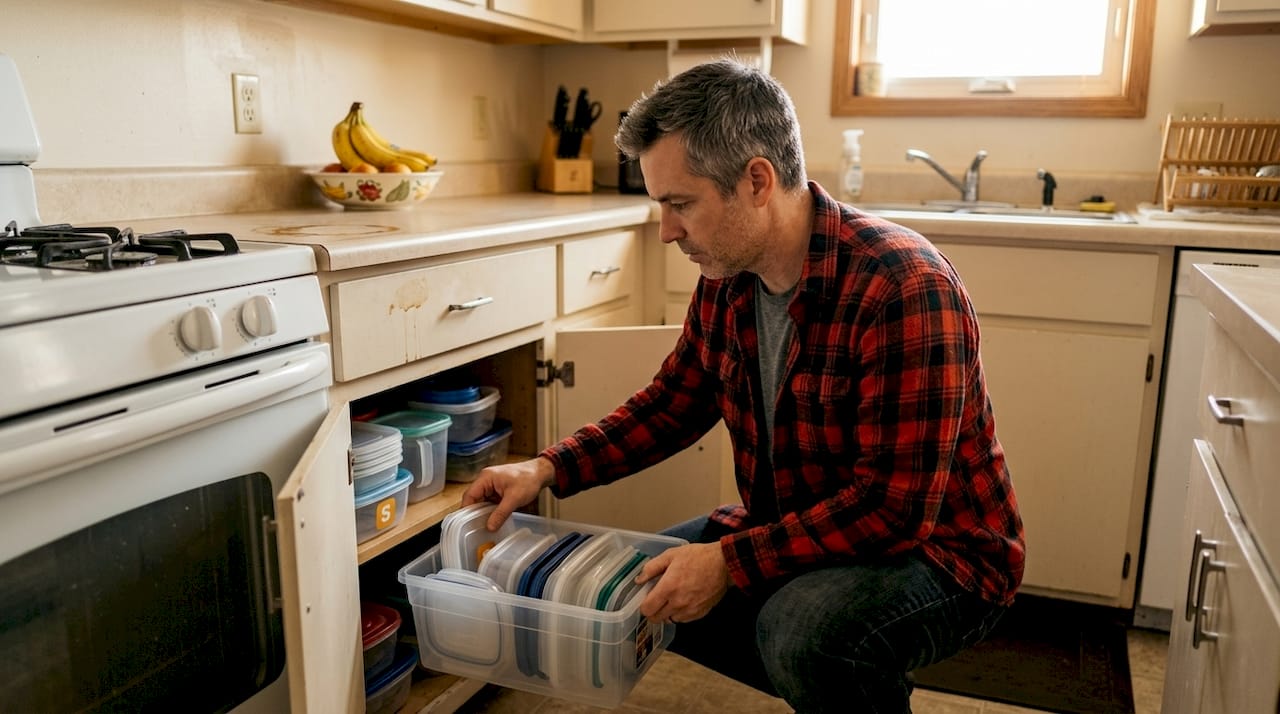
Store items as close as possible to where you actually use them. Coffee supplies belong near the coffee maker, not across the kitchen. Cleaning products work best in the rooms you clean them in. Shoes should live by the door you exit through most often. This point-of-use storage reduces friction and makes maintaining organization effortless.
Clear containers create visual boundaries that define storage spaces and prevent overflow. When you can see contents at a glance, you avoid buying duplicates and know immediately when categories need attention. Opaque bins hide problems until they become overwhelming.
| Step | Objective | Practical tip |
|---|---|---|
| 1. Declutter | Remove excess and identify keepers | Use 4-box method per zone |
| 2. Group like items | Simplify finding and storing | Gather all similar items first |
| 3. Assign homes | Store near point of use | Map daily routines to storage |
| 4. Contain boundaries | Define clear limits per category | Use clear bins to see contents |
| 5. Daily maintenance | Prevent clutter return | 5-minute evening reset |
The final step, daily maintenance, separates temporary organization from permanent lifestyle change. A simple 5-minute reset each evening returns items to their assigned homes before disorder accumulates. This small habit prevents the weekend marathon cleaning sessions that exhaust homeowners.
Pro Tip: Incorporate vertical space aggressively. Walls offer massive storage potential through shelves, hooks, and hanging organizers that keep floors clear. Never fill containers more than 80% full or retrieval becomes difficult and items get damaged.
Just as service reminders for home upkeep prevent costly repairs, daily organization habits prevent clutter crises. Understanding the full range of home services for U.S. homeowners helps you maintain both your home's structure and its organized systems.
For detailed implementation guidance, review this complete home organization system that expands on each step with room-specific examples.
Maximize usability: focus on high-touch zones and smart storage
Effective organization prioritizes the spaces you interact with most frequently throughout your day. Apply the Two-Foot Rule: Organize the 2 feet of high-touch space around you in each room (e.g., nightstand, sink) for immediate efficiency gains. This focused approach delivers maximum impact with minimum effort by concentrating on zones that affect your daily experience most directly.
Your nightstand, bathroom sink area, kitchen counter workspace, and entryway drop zone represent high-touch zones that deserve priority attention. These spaces get used multiple times daily, so even small improvements compound into significant stress reduction and time savings. When these zones function smoothly, your entire home feels more organized.
Frequency-based storage placement optimizes accessibility and space utilization. Use frequency-based storage: Daily items at arm level, weekly higher/lower; velvet hangers save 40% closet space. Daily-use items belong at eye level and arm's reach. Weekly items can go higher or lower. Monthly or seasonal items belong in harder-to-reach storage like top shelves or basement areas.
| Storage height | Item frequency | Kitchen example | Closet example | Bathroom example |
|---|---|---|---|---|
| Eye to chest level | Daily use | Everyday dishes, coffee | Current season clothes | Toothbrush, daily skincare |
| Waist to knee level | 2-3 times weekly | Mixing bowls, baking sheets | Shoes, accessories | Extra toiletries, styling tools |
| Above head or floor | Monthly or seasonal | Special occasion serving ware | Off-season clothes, luggage | Backup supplies, cleaning products |
Smart storage solutions multiply your usable space without requiring more square footage. Slim velvet hangers reduce bulk by 40% compared to traditional plastic or wooden hangers, instantly creating closet breathing room. Drawer dividers prevent items from mixing and wasting space. Over-door organizers capture vertical space that otherwise goes unused.
Quick-win strategies for immediate usability improvements:
- Install hooks inside cabinet doors for measuring cups, pot lids, or cleaning gloves
- Use lazy susans in corner cabinets and refrigerators to eliminate dead zones
- Add drawer organizers before items go in, not after chaos develops
- Mount magnetic strips for knives, scissors, or metal tools to free drawer space
- Place step stools in closets and pantries to make high storage genuinely accessible
Pro Tip: Label everything, even if you think it's obvious. Labels train household members where items belong and eliminate the "where does this go" question that leads to countertop clutter. Use a label maker or simple masking tape and marker for quick, clear identification.
Seamless systems work better than complex ones. The easier you make it to put something away correctly, the more likely it happens consistently. If you need to move three things to store one item, that system will fail. Design storage that requires one simple motion.
To simplify home service booking, apply these same usability principles to managing maintenance tasks and contractor information.
Learn more about strategic space optimization through this guide on the two-foot rule organization approach.
Sustain your space: daily maintenance habits and avoiding common pitfalls
Creating organized spaces is worthless without systems to maintain them. 80% of clutter returns in 6 months without maintenance; implement 15-min daily habit. This sobering statistic reveals why so many homeowners feel trapped in cycles of organizing, then re-organizing the same spaces repeatedly. Breaking this pattern requires intentional maintenance habits built into daily routines.
A 15-minute daily decluttering session or 5-minute evening reset prevents clutter accumulation before it becomes overwhelming. These small time investments save hours of weekend marathon cleaning. Set a specific time, like right after dinner or before bed, and make it non-negotiable. Consistency matters more than perfection.
The health benefits of organized spaces extend beyond aesthetics. Cluttered homes elevate cortisol (stress hormone), especially in women; organized spaces reduce stress by 13%. Lower cortisol improves sleep quality, mood stability, and overall wellbeing. Your physical environment directly impacts your mental and physical health.
Common organizing pitfalls sabotage even well-intentioned efforts:
- Buying storage containers before completing decluttering leads to wasted money and unused bins
- Copying Pinterest-perfect systems that don't match your family's actual habits creates frustration
- Ignoring how household members naturally use spaces results in systems nobody follows
- Skipping maintenance routines allows disorder to rebuild immediately
- Perfectionism that prevents starting because you can't do everything at once
Common pitfalls: Buying bins before decluttering, copying others' systems, ignoring family habits, no maintenance—fix by customizing to real life, starting small. Your organizing system must fit your household's reality, not an idealized version of how you wish you lived. Observe actual behavior patterns and design around them.
Pro Tip: Start with just one drawer or cabinet. Complete success in a small space builds confidence and momentum better than partial progress in multiple areas. Once that single space stays organized for two weeks, expand to the next zone. Small wins compound into household transformation.
Sustainable maintenance habits:
- Implement "one in, one out" rule: when something new enters, something old leaves
- Do a quick 60-second scan of each room before leaving it
- Handle mail immediately: trash, file, or action, never "deal with later"
- Put items away after use, not "later" or "when I have time"
- Schedule monthly 15-minute reviews of high-traffic zones to catch drift before it becomes clutter
"Organizing is what you do before you do something, so that when you do it, it is not all mixed up. The key is not to prioritize what's on your schedule, but to schedule your priorities."
Just as service reminders home upkeep prevents expensive repairs through consistent attention, daily organizing habits prevent clutter crises through small, regular maintenance.
Customization is essential. A system that works brilliantly for a single professional will fail spectacularly for a family with young children. Design your organization around real life: how your family actually moves through spaces, where items naturally accumulate, and what habits you can realistically maintain.
For detailed guidance on avoiding setup mistakes, explore organizing mistakes and fixes that covers the most common errors and their solutions. Understanding the broader context of clutter statistics and health reinforces why maintaining organized spaces matters for your wellbeing.
Explore smart home management with The Simple Service App
Organizing your physical spaces is just one element of simplified home management. The Simple Service App extends these same efficiency principles to scheduling and tracking home maintenance tasks that keep your organized spaces functional long-term. When HVAC filters need changing, gutters require cleaning, or seasonal services come due, automated reminders prevent small issues from becoming expensive emergencies.

Just as daily resets maintain organized rooms, service reminders maintain your home's systems. The app consolidates all home service scheduling, booking, and tracking in one simple platform. You gain the same stress reduction from automated home maintenance that you experience from organized closets and clear countertops.
Key benefits that complement your organization efforts:
- Automated reminders eliminate mental load of tracking service schedules
- Centralized booking saves time hunting for reliable contractors
- Service history tracking prevents duplicate work or missed maintenance
- Expert consultation helps prioritize tasks and avoid unnecessary services
Discover how technology simplifies the ongoing work of homeownership at The Simple Service App landing page. Managing your home shouldn't require constant mental effort when simple systems handle the details automatically.
Frequently asked questions
What are the easiest organization tips for beginners?
Start with decluttering small, contained areas using the 4-box method: one drawer, one shelf, or one cabinet. Establish a 5-minute daily reset habit where you return items to their designated homes before bed. Use baskets or bins to quickly group similar items together, even before creating a perfect system. Focus on completing one zone or room fully rather than partially organizing multiple spaces, which builds confidence and visible progress.
How can I maintain organization with a busy family?
Use hooks and trays near entrances for easy drop-off spots that capture items before they scatter throughout the house. Label storage clearly with words or pictures so every family member knows exactly where items belong. Encourage the one-touch rule: put items away immediately upon finishing with them rather than setting them down temporarily. Keep systems simple and accessible for all family members, including young children, so participation requires minimal effort.
What common mistakes should I avoid when organizing?
Don't purchase storage containers before decluttering first, since you cannot accurately assess your needs until you know what you're keeping. Avoid copying organizing systems from social media or friends that don't fit your family's actual lifestyle and habits. Consider how household members naturally use spaces and design around real behavior patterns, not idealized versions. Maintain organized spaces regularly with daily resets to prevent clutter's return, since 80% comes back within six months without maintenance habits.
How does organizing reduce stress at home?
Clutter increases stress hormone cortisol in home occupants, particularly affecting women who often bear primary household management responsibility. Organized environments can reduce stress levels by up to 13% through decreased visual chaos and improved functionality. Better organization supports mental wellbeing and daily calm by eliminating the frustration of lost items, wasted time searching, and overwhelming visual disorder. When your environment functions smoothly, your nervous system relaxes and cognitive load decreases significantly.
For more detailed information on the relationship between physical environment and stress, review clutter statistics and health research findings.