
Managing home services can feel overwhelming when you're juggling multiple appointments, vendors, and maintenance schedules. Many homeowners wonder what service management actually means and how it applies beyond corporate IT departments. This guide clarifies service management principles and shows you how modern methods and software improve home service booking, scheduling, and maintenance planning. You'll discover practical strategies to coordinate repairs, reduce no-shows, and keep your property in top condition without the stress of managing every detail yourself.
Table of Contents
- Key takeaways
- Understanding service management basics for homeowners
- Core principles and methodologies adapted for home service management
- Practical applications and tools for effective home service management
- Challenges, nuances, and expert tips for mastering home service management
- Discover simple solutions for your home service needs
- FAQ
Key Takeaways
| Point | Details |
|---|---|
| Coordinate bookings and maintenance | Plan recurring home services with a shared calendar to reduce forgotten maintenance and emergency repairs. |
| Preventive maintenance planning | Implement a calendar of preventive tasks to lower the risk of failures and costly emergencies. |
| Reminders reduce no shows | Automated reminders cut missed appointments and keep schedules on track. |
| Start simple then iterate | Begin with familiar tools and gradually expand processes to avoid excessive complexity. |
Understanding service management basics for homeowners
Service management is a set of activities ensuring efficient service delivery that meets customer needs without requiring them to handle costs and risks directly. In the IT world, ITIL provides a structured methodology with processes and principles for managing services. For homeowners, this concept translates into coordinating bookings, repairs, and maintenance tasks across multiple vendors and timelines.
The core benefits include reducing your burden as a homeowner, saving time on coordination, and improving outcomes for repairs and upkeep. Instead of tracking every appointment manually or scrambling when something breaks, service management creates systems that work proactively. This approach transforms reactive crisis management into organized, preventive care for your property.
Common processes adapted for home services include scheduling appointments efficiently, dispatching the right vendors, sending automated reminders, and planning preventive maintenance. These activities mirror business service management but focus on residential needs like HVAC tune-ups, plumbing inspections, and seasonal yard work.
Pro Tip: Start by listing all recurring home services you need annually, then create a simple calendar to visualize when each task should happen. This basic planning step immediately reduces forgotten maintenance and emergency repairs.
Key elements homeowners should understand:
- Scheduling systems that group appointments by location and time
- Communication workflows using reminders and confirmations
- Vendor coordination to ensure the right expert arrives prepared
- Preventive maintenance calendars that anticipate needs before failures occur
- Documentation and photo proof to verify completed work
Think of service management as your personal home operations system. Just as businesses use frameworks to deliver consistent value, you can apply similar principles to maintain your property efficiently and avoid costly surprises.
Core principles and methodologies adapted for home service management
ITIL's seven guiding principles provide a foundation that translates remarkably well to home service contexts when adapted thoughtfully:
-
Focus on value: Every service should solve a real problem or prevent future issues. Schedule maintenance that protects your investment, not just tasks that sound important.
-
Start where you are: Use existing vendor relationships and tools before investing in complex systems. Your current calendar app might suffice initially.
-
Progress iteratively: Improve your service management gradually. Begin with one recurring service, perfect that process, then expand.
-
Collaborate and promote visibility: Share schedules with family members and communicate clearly with vendors about access and expectations.
-
Think holistically: Consider how different services interact. HVAC maintenance affects energy bills, which impacts your overall home budget.
-
Keep it simple: Avoid overcomplicating your system. A straightforward approach with clear schedules beats elaborate plans you won't maintain.
-
Optimize and automate: Use technology for reminders and booking when it genuinely saves time, but don't automate for automation's sake.
The service value chain activities translate to home services as planning annual maintenance needs, continuously improving based on vendor performance, engaging with service providers proactively, designing smooth booking workflows, obtaining reliable vendors, and ensuring quality delivery and support.
Zone-based scheduling demonstrates these principles in action by grouping appointments geographically:
| Scheduling Method | Average Drive Time | Appointments Per Day | Efficiency Gain |
|---|---|---|---|
| Random scheduling | 45 minutes | 4-5 | Baseline |
| Zone-based scheduling | 25-30 minutes | 6-7 | 20-35% improvement |
| Optimized zones with buffers | 20-25 minutes | 7-8 | 35-40% improvement |
This data shows how reducing drive time by organizing appointments within geographic zones allows vendors to complete more work daily, potentially lowering your costs through improved efficiency.
Pro Tip: When booking multiple services in a season, request appointments within the same week and mention you have other vendors scheduled. Many providers will adjust timing to coordinate efficiently, benefiting everyone.
Iterative improvement means reviewing what worked after each service appointment. Did the vendor arrive on time? Was the communication clear? Use this feedback to refine your approach and build better relationships with reliable providers.

Practical applications and tools for effective home service management
Several software platforms help homeowners apply service management principles without requiring technical expertise. Popular options include Housecall Pro, vcita, FieldPulse, and Bookafy, each offering features tailored to different needs. These tools transform abstract concepts into practical scheduling, communication, and tracking capabilities you can use immediately.
Zone and buffer scheduling improve efficiency significantly. Buffers are time gaps between appointments that account for travel, unexpected delays, or extended service needs. When vendors use zone scheduling, they group appointments by area, reducing drive time and potentially passing savings to you through competitive pricing.
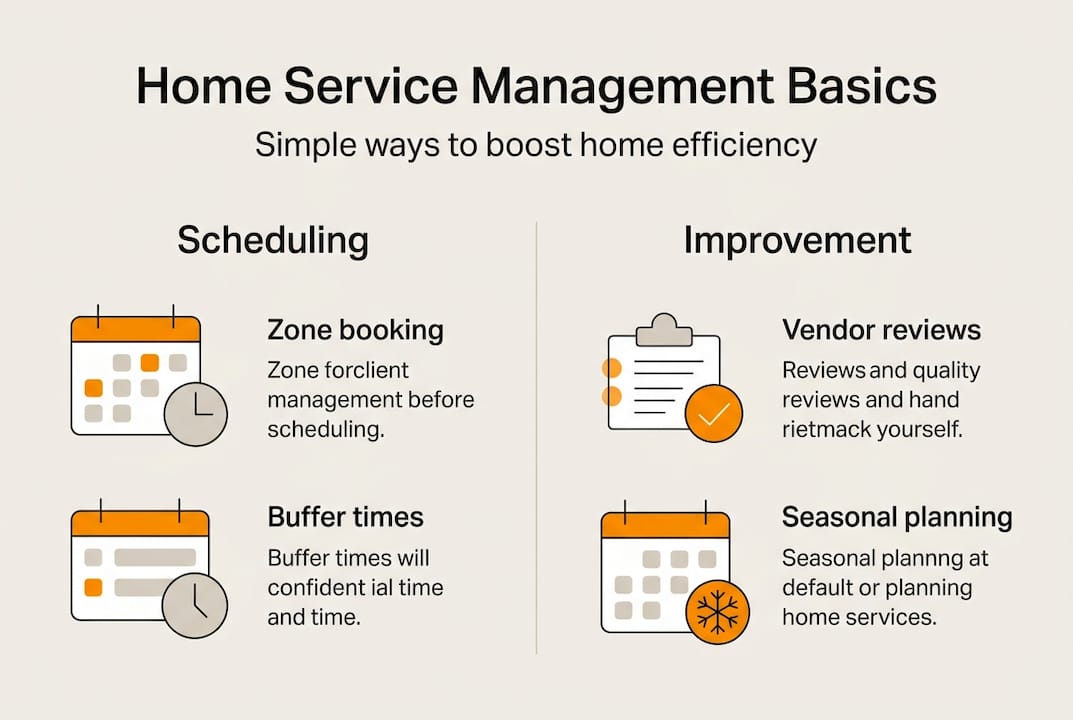
Preventive maintenance scheduling delivers substantial benefits by catching problems early. Budget 1-3% of your home's value annually for preventive tasks like HVAC servicing, gutter cleaning, and appliance inspections. A $300,000 home might allocate $3,000-$9,000 yearly, which sounds significant but prevents far costlier emergency repairs.
Practical implementation strategies:
- Set automated reminders 48 hours before appointments to reduce forgotten schedules
- Request deposits for expensive services to ensure vendor commitment and reduce your no-show risk
- Coordinate multiple vendors through a single point of contact when possible
- Use photo proof requests to document completed work and create maintenance records
- Establish preferred vendor relationships for recurring services to build trust and consistency
Comparing software features helps identify the right tool:
| Platform | Online Booking | Automated Reminders | Preventive Maintenance Calendar | Photo Proof | Best For |
|---|---|---|---|---|---|
| Housecall Pro | Yes | Yes | Yes | Yes | Comprehensive management |
| vcita | Yes | Yes | Limited | No | Simple booking focus |
| FieldPulse | Yes | Yes | Yes | Yes | Multi-vendor coordination |
| Bookafy | Yes | Limited | No | No | Basic scheduling needs |
Pro Tip: Combine multiple communication channels for appointment confirmations. Send an email, follow with a text reminder, and request calendar acceptance. This multi-touch approach increases confirmation rates significantly and reduces miscommunication.
When selecting tools, prioritize features that address your specific pain points. If you frequently forget maintenance tasks, emphasize automated reminders and preventive calendars. If coordinating multiple vendors creates confusion, focus on platforms with strong communication workflows and vendor management capabilities.
The key is starting simple and expanding as you identify additional needs. Many homeowners begin with basic online booking, discover the value of automated reminders, then gradually adopt more sophisticated features like preventive maintenance tracking and photo documentation.
Challenges, nuances, and expert tips for mastering home service management
Emergency bookings present unique challenges because they require flexible scheduling slots that can accommodate urgent needs without disrupting planned maintenance. Smart service management reserves capacity for emergencies while maintaining efficient regular scheduling. This balance prevents crisis mode from becoming your default operating state.
No-show mitigation strategies include requiring deposits, sending multi-channel reminders, and confirming appointments 24 hours in advance. These approaches reduce no-show rates substantially, protecting both your time and vendor relationships. When vendors experience fewer no-shows, they can offer more competitive pricing and reliable scheduling.
Multi-vendor coordination becomes manageable through concierge models where one point of contact manages various service providers. This approach simplifies communication and ensures consistent quality standards across different trades and specialties.
Key performance indicators help evaluate your service management effectiveness:
- Booking rates of 15-25% indicate healthy conversion from inquiry to scheduled service
- Response times under 5 minutes boost conversion rates significantly
- Gross margins around 33% suggest fair pricing for quality service
- First-time fix rates of 80-85% show vendors arrive properly prepared
Repair versus replacement decisions often hinge on the 50% repair threshold. When repair costs exceed half the replacement cost, replacement usually makes better financial sense. This rule guides smart investment decisions and prevents throwing money at dying equipment.
Expert strategies for optimization:
- Maintain floating appointment slots specifically for emergencies rather than booking calendars completely full
- Build relationships with 2-3 reliable vendors per service category to ensure backup options
- Document all service history with dates, costs, and outcomes to inform future decisions
- Schedule preventive maintenance during off-peak seasons when vendors offer better rates
- Bundle multiple services when possible to reduce total coordination time and potentially negotiate package pricing
Fast response times and professional software don't just improve customer experience. They directly impact revenue growth by converting more inquiries into booked appointments and reducing the costly inefficiencies of poor coordination. Homeowners who implement these systems report 20-30% fewer emergency repairs and significantly lower annual maintenance costs.
Understanding these nuances transforms service management from a theoretical concept into practical cost savings and reduced stress. The difference between reactive homeownership and proactive property management often comes down to implementing these expert strategies consistently.
Another critical nuance involves seasonal planning. HVAC services cost less in spring and fall than during peak summer or winter demand. Gutter cleaning before fall leaves arrive prevents clogs. Strategic timing based on service type and regional weather patterns maximizes value and availability.
The most successful homeowners treat service management as an ongoing practice rather than a one-time setup. They review vendor performance quarterly, adjust preventive maintenance schedules based on actual equipment condition, and refine communication processes to eliminate friction points. This continuous improvement mindset, borrowed directly from business service management principles, delivers compounding benefits over time.
Discover simple solutions for your home service needs
Applying service management principles shouldn't require becoming an expert in scheduling software or vendor coordination. The Simple Service App implements these concepts in a user-friendly platform designed specifically for homeowners who want professional-grade service management without the complexity.

Our network of contracting consultants handles booking, negotiation, and coordination across all your home services from one central place. You get the benefits of zone scheduling, automated reminders, and preventive maintenance planning without managing the details yourself. Think of us as your personal home agent, making service booking as simple as possible while applying the proven principles discussed throughout this guide. We reduce no-shows, optimize scheduling efficiency, and keep your preventive maintenance on track so you can focus on enjoying your home rather than managing it.
FAQ
What is service management in home services?
Service management coordinates scheduling, communication, and maintenance tasks to efficiently deliver home services. It helps homeowners avoid managing every detail themselves while ensuring quality outcomes and preventing costly emergencies through organized, proactive planning.
How does zone scheduling improve home service efficiency?
Grouping appointments by geographic zones reduces drive times 20-35%, allowing vendors to complete more appointments daily. This efficiency can lower your costs through competitive pricing and improves appointment availability by maximizing vendor capacity.
What are common ways to reduce no-shows for home services?
Automated reminders, deposits, and multi-channel confirmations significantly lower no-show rates. Sending email confirmations followed by text reminders 48 hours before appointments, combined with calendar invitations, creates multiple touchpoints that keep services top of mind and reduce forgotten appointments.
Why is preventive maintenance important in home service management?
Regular preventive maintenance reduces emergency repairs by catching problems early and extends equipment life substantially. Budgeting 1-3% of home value annually for scheduled maintenance tasks prevents far costlier crisis repairs and keeps your property in optimal condition year-round.
How do I choose the right service management software?
Prioritize features addressing your specific pain points, such as automated reminders if you forget appointments or vendor coordination tools if managing multiple providers creates confusion. Start with basic functionality and expand as you identify additional needs rather than overwhelming yourself with complex systems initially.