

You expect a plumber to arrive on time, but when they're late and you can't reach anyone for an update, frustration sets in fast. 97% of homeowners expect immediate responses when they book or manage home services, yet many still face slow communication and unclear expectations. Responsive customer support transforms these pain points into smooth experiences, making booking easier and building trust in service quality. This guide reveals how customer support directly impacts your home service journey and what you can do to benefit from it.
Table of Contents
- Key takeaways
- Understanding homeowner expectations for customer support in home services
- How customer support strategies improve booking and service management
- Navigating challenges and balancing AI with human support in home services
- Building a culture-first customer support team to enhance homeowner satisfaction
- Discover simplified home service booking and management
- Frequently asked questions about customer support in home services
Key Takeaways
| Point | Details |
|---|---|
| Immediate response expectations | Nearly all homeowners expect immediate responses when booking or managing services, and delays erode trust. |
| Transparent pricing matters | Transparent pricing eliminates friction by showing exact costs before work starts. |
| Proof of work | Providing proof of completed work through photos or detailed reports builds confidence in job quality. |
| AI plus human support | AI and human support together improve response times and reduce no shows. |
Understanding homeowner expectations for customer support in home services
Your expectations for customer support shape how service providers approach communication and booking management. Fast, responsive interaction sits at the top of every homeowner's priority list. When you reach out to schedule a service or ask a question, waiting hours or days for a response creates unnecessary stress. Research shows 97% of homeowners expect immediate responses, and this expectation drives how successful companies structure their support systems.
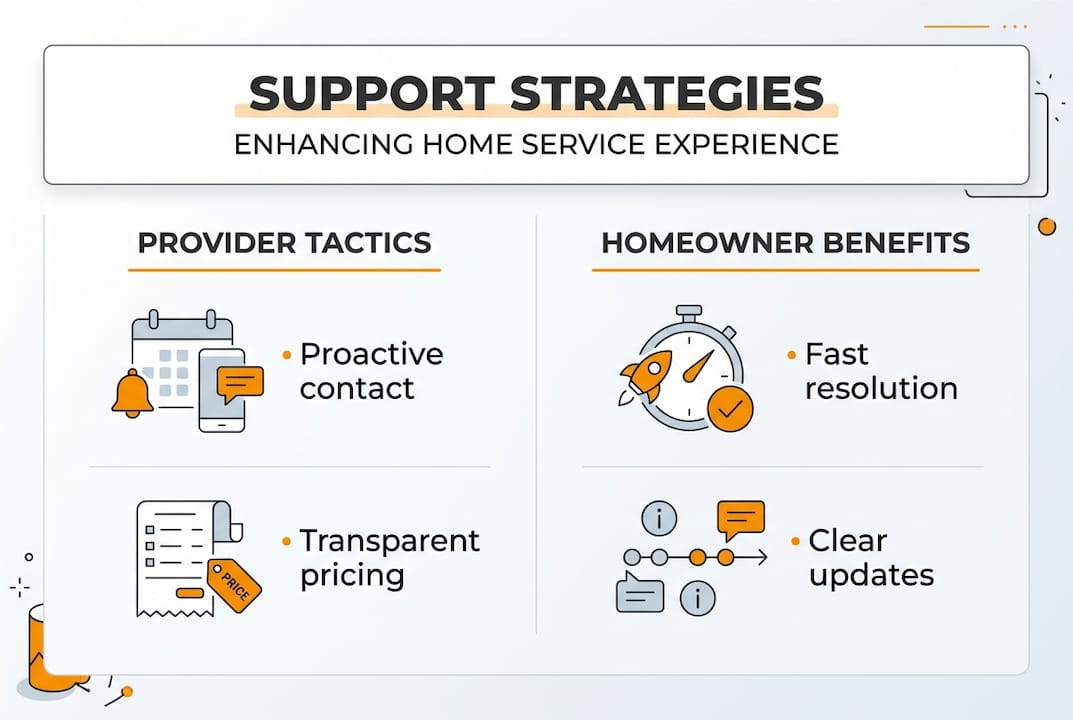
Transparent pricing eliminates one of the biggest sources of friction in home services. You want to know exactly what you'll pay before work begins, with no hidden fees appearing on the final bill. Proof of completed work through photos or detailed reports gives you confidence that the job was done right. These elements build trust between you and service providers, creating relationships that last beyond a single appointment.
Quality support commands premium pricing, and homeowners recognize this value. Studies reveal 72% are willing to pay 10% more for services with better support reputation. You understand that responsive communication, clear expectations, and reliable follow-through justify slightly higher costs. This willingness to invest in better experiences pushes the entire industry toward improved standards.
Common frustrations arise when providers fail to meet these basic expectations:
- Late arrivals without notification or explanation
- Vague pricing estimates that balloon into unexpected charges
- Radio silence after initial booking confirmation
- Unclear scope of work leading to incomplete jobs
- No follow-up to ensure satisfaction or address concerns
Proactive communication prevents many of these issues before they escalate. Text message reminders about upcoming appointments reduce no-shows significantly, keeping your schedule on track and minimizing wasted time. When providers send updates about technician arrival times or potential delays, you can plan your day accordingly instead of sitting around waiting. This level of attention to communication transforms types of home services for US homeowners from necessary hassles into manageable tasks.
"Homeowners don't just want their problems fixed. They want to feel heard, informed, and valued throughout the entire service process. Communication quality matters as much as technical skill."
Your expectations continue evolving as technology improves and competition increases. You now expect instant booking confirmations, real-time tracking of service providers, and immediate access to support when questions arise. Meeting these standards requires providers to invest in both technology and trained support teams who understand your needs.
How customer support strategies improve booking and service management
Specific tactics transform customer support from a reactive function into a proactive advantage that makes your service experience smoother. AI integration handles initial booking and triage with impressive speed and accuracy. When you call or message a service provider, artificial intelligence can check availability, schedule appointments, and answer basic questions instantly. Data shows AI voice agents book 15.8 to 29.6% of calls, freeing human representatives to focus on complex situations that require judgment and empathy.
Proactive communication prevents problems before they disrupt your day. Text message confirmations and reminders keep appointments top of mind, dramatically reducing no-shows and last-minute cancellations. You receive updates about technician arrival windows, potential delays, and completion estimates without having to chase down information. This approach respects your time and reduces the anxiety that comes with uncertainty about service timing.
First-contact resolution stands as a critical metric for support quality. When you reach out with a question or concern, getting a complete answer on the first interaction saves time and frustration. Support representatives trained to solve problems immediately rather than passing you between departments create significantly better experiences. This efficiency translates directly into higher satisfaction and increased likelihood you'll use the service again.

Follow-up communication after service completion drives referrals and builds lasting relationships. Research indicates 73% of referrals are driven by follow-up communication, making post-service contact one of the most valuable activities providers can undertake. A simple call or message asking about your satisfaction shows genuine care and opens the door for you to share feedback or request additional services.
Key strategies that enhance your booking experience include:
- Automated scheduling that syncs with your calendar and sends confirmations
- Multi-channel support letting you reach providers via phone, text, email, or app
- Real-time updates about service provider location and estimated arrival
- Digital payment options that eliminate awkward cash or check transactions
- Instant access to service history and receipts for warranty or tax purposes
Implementing these tactics requires clear performance standards for support representatives. Providers who measure response times, resolution rates, and customer satisfaction scores consistently deliver better experiences. You benefit when companies hold their teams accountable to specific metrics that align with your expectations for speed and quality.
To maximize your home service booking workflow, follow this sequence:
- Research providers with strong support reputations through reviews and ratings
- Confirm communication preferences during initial contact
- Request detailed estimates and timelines before committing
- Save confirmation messages and reference numbers for easy follow-up
- Provide feedback after service to help improve future experiences
Pro Tip: When booking home services, ask how the provider handles communication if issues arise during the job. Companies with clear escalation processes and empowered support staff resolve problems faster and with less stress for you.
These strategies work together to create a seamless experience from initial inquiry through service completion and beyond. Technology handles routine tasks efficiently while human expertise addresses nuanced situations that require personal attention. This balance ensures you get quick responses when possible and thoughtful solutions when complexity demands more careful handling.
Navigating challenges and balancing AI with human support in home services
Real-world complications test even the best customer support systems, revealing where technology excels and where human judgment remains essential. Difficult situations emerge regularly in home services, creating scenarios that require careful handling. Late arrivals disrupt your schedule and create cascading delays in your day. Unclear pricing leads to disputes when the final bill doesn't match your expectations. No-shows waste your time when you've arranged to be home for service. Emergencies like burst pipes or electrical failures demand immediate attention and clear communication under pressure.
AI-powered support handles routine requests with impressive efficiency but struggles with exceptions and edge cases. When you have a straightforward question about availability or pricing, automated systems provide instant answers. However, AI support can create Kafkaesque confusion when your situation doesn't fit standard patterns. You might find yourself caught in loops of automated responses that don't address your specific concern, unable to reach a human who can exercise judgment and make exceptions.
Human support representatives bring irreplaceable skills to complex situations. When a technician discovers unexpected damage that changes the scope of work, you need to discuss options and make decisions based on your priorities and budget. Automated systems can't read your tone, understand your unique circumstances, or adapt recommendations to your specific needs. Empathy and active listening become crucial when you're frustrated or dealing with an emergency that affects your home and family.
Comparing AI and human support reveals distinct strengths:
| Support type | Best for | Limitations |
|---|---|---|
| AI automation | Booking appointments, checking availability, sending reminders, answering FAQs | Cannot handle exceptions, lacks empathy, struggles with complex problem-solving |
| Human representatives | Complex situations, conflict resolution, personalized advice, emergency response | Higher cost, limited availability, potential for inconsistent quality |
| Hybrid approach | Combines speed of AI with human judgment for escalated issues | Requires seamless handoff between systems and clear escalation paths |
The most effective providers integrate both approaches strategically. AI triages your initial contact, gathers basic information, and routes you to the right human expert when needed. You benefit from quick responses on simple matters while still having access to knowledgeable people for situations that demand personal attention. This balance maximizes efficiency without sacrificing the human touch that builds trust and resolves difficult problems.
Pro Tip: When choosing a home service provider, test their support system by asking a question that requires judgment rather than a standard answer. How quickly you reach a knowledgeable human reveals how well they balance automation with personal service.
Managing your service appointments efficiently means understanding when to expect automated responses and when to request human assistance. For routine scheduling and updates, embrace the speed of technology. For pricing disputes, unexpected complications, or emergency situations, insist on speaking with someone who can make decisions and take ownership of finding solutions.
The future of customer support in home services lies in thoughtful integration rather than wholesale replacement of humans with machines. You want systems that use AI to eliminate friction and speed up simple interactions while preserving human expertise for moments that truly matter. Providers who get this balance right deliver consistently better experiences across the full range of situations you'll encounter.
Building a culture-first customer support team to enhance homeowner satisfaction
Sustaining excellent customer support requires more than good intentions, demanding systematic investment in people, training, and tools that maintain high standards over time. Continuous training transforms adequate support representatives into skilled professionals who genuinely improve your experience. Role-playing exercises prepare team members for difficult conversations, teaching them to stay calm when you're frustrated and find solutions when problems seem intractable. Deep product knowledge enables representatives to answer your questions confidently without constantly checking with supervisors or putting you on hold.
Field service management software automates routine tasks that previously consumed support team time and attention. These systems send appointment reminders automatically, track technician locations in real time, and generate completion reports without manual intervention. By handling administrative work efficiently, software frees representatives to focus on interactions that require human judgment and empathy. This automation improves consistency, ensuring you receive the same high-quality experience regardless of which team member assists you.
A culture-first approach prioritizes genuine care over scripted interactions. Instead of forcing representatives to follow rigid scripts that sound robotic and impersonal, forward-thinking companies empower their teams to use judgment and take ownership of your satisfaction. This philosophy recognizes that you can tell the difference between someone reading from a script and someone who actually wants to help solve your problem. Authentic engagement builds trust and loyalty far more effectively than perfect adherence to corporate talking points.
These methods deliver measurable results. Studies show training and field service management software prevent 80% of conflicts by addressing potential issues before they escalate into serious problems. When representatives can spot warning signs and intervene proactively, you avoid frustrating situations entirely. This prevention-focused approach saves time and stress for everyone involved while significantly reducing the need for formal complaint resolution processes.
Key elements of a strong support culture include:
- Regular feedback sessions where representatives learn from challenging interactions
- Clear authority to make decisions without excessive approval layers
- Recognition systems that reward genuine problem-solving and customer advocacy
- Ongoing education about new services, pricing, and industry best practices
- Technology tools that provide instant access to customer history and preferences
Automated reminders help you stay organized with service schedules, reducing the mental load of tracking maintenance tasks and recurring appointments. When your HVAC system needs seasonal servicing or your lawn care follows a regular schedule, automatic notifications ensure nothing falls through the cracks. This proactive approach benefits you by preventing emergency situations that result from neglected maintenance.
"The best customer service doesn't feel like customer service. It feels like a helpful neighbor who genuinely cares about solving your problem and making your life easier."
Investing in support team development pays dividends through increased retention and referrals. When you consistently receive helpful, knowledgeable assistance, you naturally recommend the service to friends and family. You also become more forgiving of occasional mistakes because you trust the provider will make things right. This loyalty transforms one-time transactions into long-term relationships that benefit both you and the service provider.
Understanding what service management means for homeowners reveals how behind-the-scenes systems and culture directly impact your day-to-day experience. Companies that treat support as a strategic priority rather than a cost center consistently outperform competitors who view it as a necessary evil. You notice this difference in every interaction, from initial booking through final follow-up.
Discover simplified home service booking and management
Navigating multiple service providers with inconsistent communication standards creates unnecessary complexity in managing your home. The Simple Service App eliminates this frustration by centralizing all your home service needs in one platform that prioritizes responsive support. Our network of contracting consultants combines AI-driven booking efficiency with human expertise to ensure smooth experiences from start to finish.
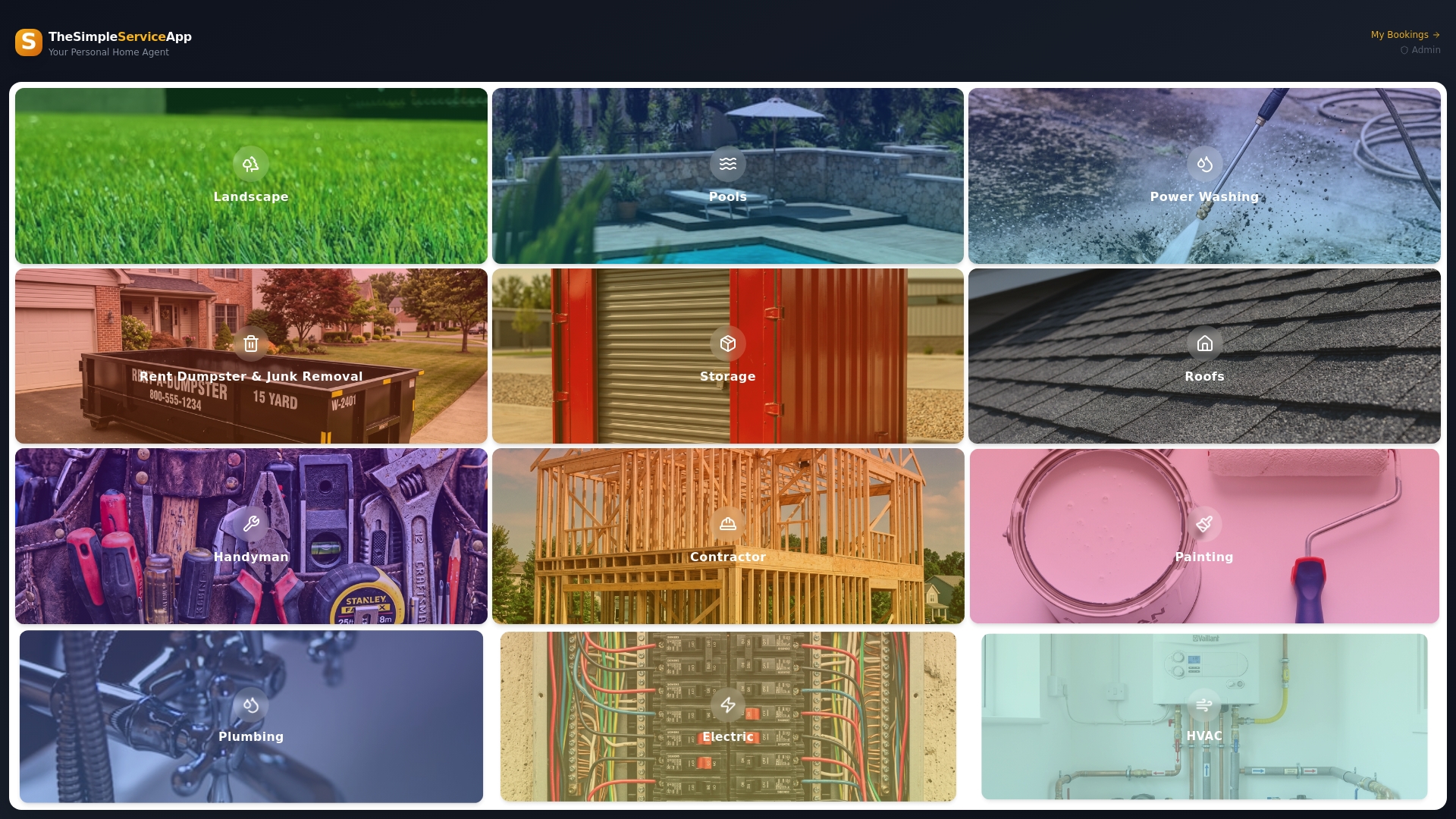
Transparent pricing, automated appointment reminders, and detailed proof of work come standard with every service booked through our platform. You avoid the communication gaps that plague traditional service arrangements, gaining peace of mind that someone is always available to answer questions or address concerns. Our consultants negotiate on your behalf and manage every detail, so you can focus on your life instead of coordinating contractors.
Try the Simple Service App to experience how integrated support and expert management transform home service booking from a frustrating chore into a simple, reliable process. Your personal home agent is ready to simplify everything.
Frequently asked questions about customer support in home services
What is the role of customer support in home services?
Customer support facilitates clear communication between you and service providers, handles booking logistics, resolves problems when they arise, and ensures you're satisfied with completed work. It serves as your primary point of contact throughout the service journey, from initial inquiry through final follow-up.
How does customer support reduce no-shows and scheduling conflicts?
Proactive communication through automated text reminders and confirmation calls keeps appointments top of mind for both you and service providers. Real-time updates about delays or changes let you adjust your schedule accordingly, while easy rescheduling options prevent cancellations when conflicts arise.
Why do some companies use AI for customer support?
AI handles routine inquiries instantly, checking availability and scheduling appointments without human intervention, which speeds up the booking process significantly. This technology works best for straightforward questions, freeing human representatives to focus on complex situations that require judgment, empathy, and problem-solving skills.
What should I expect from quality customer support?
Quality support provides immediate responses to your inquiries, transparent pricing without hidden fees, clear communication about scheduling and expectations, and proactive follow-up after service completion. You should feel informed and valued throughout the entire process, with easy access to knowledgeable representatives when questions arise.
How do follow-ups after service completion benefit homeowners?
Post-service follow-ups ensure any remaining concerns get addressed quickly and give you an opportunity to provide feedback that improves future experiences. These check-ins also build trust and loyalty, making you more likely to use the service again and recommend it to others who need similar work done.