

TL;DR:
- Seasonal maintenance saves homeowners up to 30% on major repair costs.
- Regular, simplified seasonal checklists prevent costly damage and extend home value.
- Using systems or apps for reminders creates sustainable home upkeep routines.
Most homeowners don't realize that preventive maintenance reduces major repair costs by 30%. That's a significant chunk of money left on the table simply because upkeep happens after something breaks, not before. The truth is, your home faces different threats every single season, and waiting for a problem to show up is the most expensive strategy you can choose. This article walks you through what seasonal service planning actually means, how to build a routine that works in real life, and why the homeowners who do this consistently spend far less money and stress far less than those who don't.
Table of Contents
- What is seasonal service planning?
- Key components and mechanics of seasonal service planning
- The real-world benefits: savings, health, and peace of mind
- Pro tips for mastering your seasonal home plan
- The overlooked truth about seasonal home maintenance
- Simplify your seasonal planning with smarter solutions
- Frequently asked questions
Key Takeaways
| Point | Details |
|---|---|
| Prevention saves money | Homeowners can cut repair costs by up to 30% with routine seasonal planning. |
| Focus on high-impact tasks | Gutter cleaning, HVAC care, and documenting maintenance give the best return for effort. |
| Imperfect beats inconsistent | Doing most tasks regularly is better than occasional perfect checklists. |
| Use planning tools | Digital trackers and reminders make seasonal home service easier to manage. |
What is seasonal service planning?
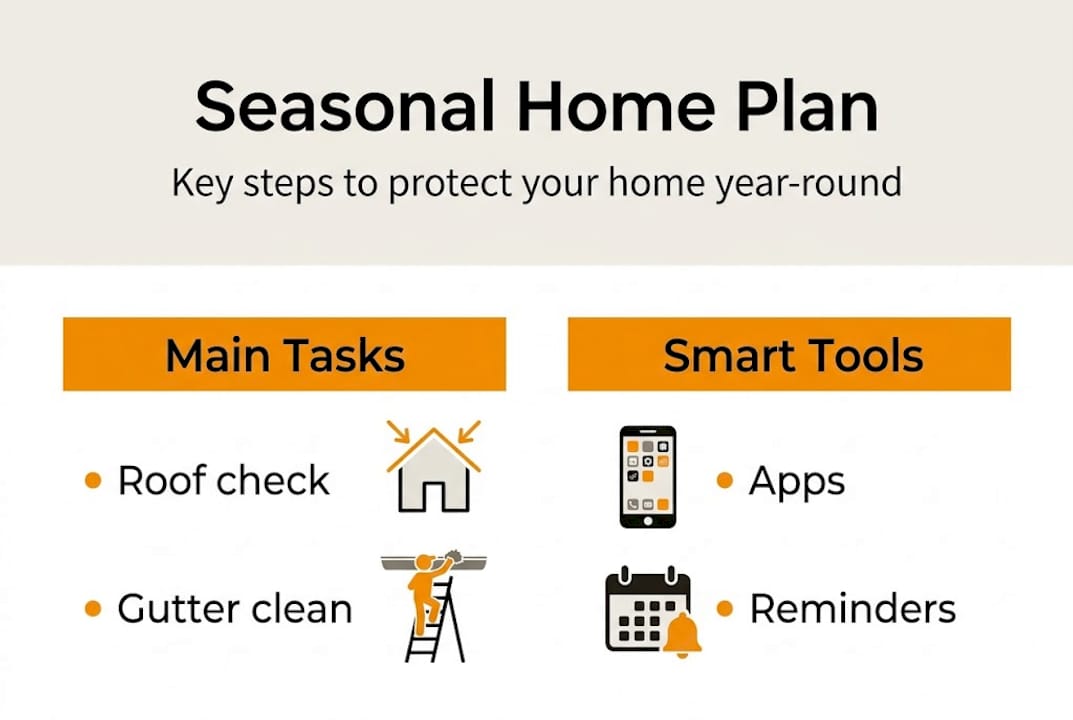
Seasonal service planning is not just making a list of chores. It's a structured approach to home upkeep that aligns your maintenance schedule with the actual stresses your home faces throughout the year. Think about what winter does to your roof, your pipes, and your heating system. Then think about what spring brings: moisture, mold risk, and the damage winter left behind. Every season creates a new set of vulnerabilities.
Seasonal service planning involves scheduling inspections, cleaning, and repairs aligned with seasonal weather stresses to prevent damage, maintain efficiency, and preserve home value. That's the core idea. Instead of reacting to a burst pipe or a failed furnace, you're staying one step ahead of the problem.
This approach transforms home maintenance from a crisis-based scramble into a calm, predictable routine. And that shift matters more than most people realize. When you know what needs to happen in March versus October, you can budget for it, schedule it in advance, and avoid the premium prices that come with emergency calls.
Here's what seasonal planning typically covers across the year:
- Spring: Roof inspection after winter, gutter cleaning, HVAC tune-up for cooling season, checking for water intrusion or foundation cracks
- Summer: Pest control, exterior painting or sealing, deck and fence checks, testing smoke and carbon monoxide detectors
- Fall: Furnace inspection, weatherproofing windows and doors, clearing gutters of leaves, draining outdoor hoses
- Winter: Monitoring for ice dams, checking insulation, inspecting pipes in unheated spaces, reviewing your emergency kit
"A home that's maintained seasonally doesn't just cost less to run. It holds its value better, sells faster, and creates a safer environment for the people living in it."
If you're new to this kind of structured approach, a solid annual home maintenance overview can help you see the full picture before diving into the details.
Key components and mechanics of seasonal service planning
Knowing the concept is one thing. Putting it into practice is another. A strong seasonal service routine is built around quarterly checklists that cover the systems most likely to fail or deteriorate with weather changes.
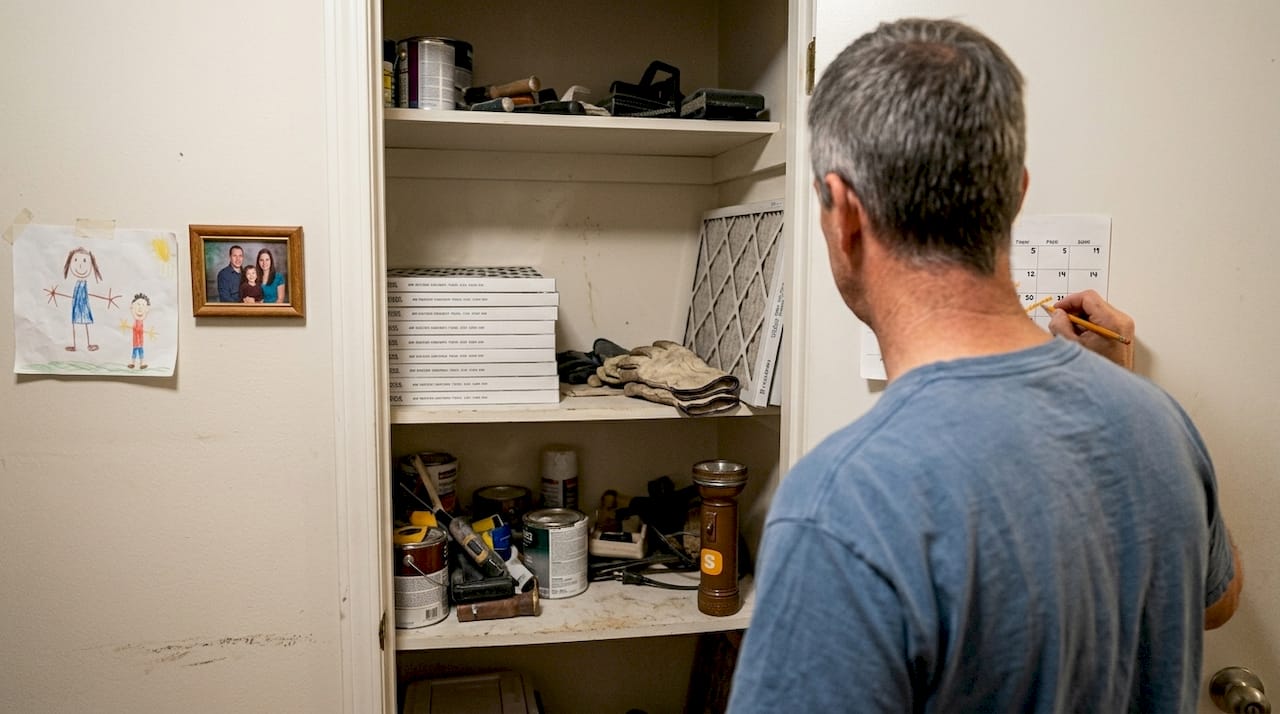
Mechanics include quarterly checklists for roof and gutter inspections, HVAC servicing, plumbing checks, pest control, and exterior sealing. These aren't optional extras. They're the foundation of a home that doesn't surprise you with a $6,000 repair bill in January.
Here's a breakdown of which tasks you can handle yourself versus which ones need a professional:
| Task | DIY or Pro | Frequency |
|---|---|---|
| HVAC filter replacement | DIY | Every 1 to 3 months |
| Gutter cleaning | DIY or Pro | Spring and Fall |
| Furnace/AC tune-up | Pro | Annually |
| Roof inspection | Pro | Annually |
| Pest control treatment | Pro | Seasonally |
| Exterior caulking/sealing | DIY | Annually |
| Plumbing leak check | DIY | Quarterly |
Once you know what needs doing, the next step is setting up a system that actually gets followed. Here's a simple process to start:
- List every major system in your home (HVAC, roof, plumbing, electrical, exterior)
- Assign each system a seasonal check-in window
- Decide which tasks you'll handle and which need a contractor
- Set calendar reminders at least 3 to 4 weeks before each task is due
- Log every completed task with the date and any notes
Digital tools make this much easier. Apps and spreadsheets let you set automatic reminders, store receipts, and track warranty dates. Paper checklists work too, but they require more discipline to maintain consistently.
Pro Tip: Pair your seasonal checklist with your summer maintenance checklist and spring cleaning checklist so nothing slips through the cracks during the busiest maintenance months of the year.
Prioritize the tasks with the highest consequence if skipped. A clogged gutter causes water damage to your foundation. A dirty HVAC filter strains the motor and shortens its life. These aren't minor inconveniences. They're expensive problems that start small.
The real-world benefits: savings, health, and peace of mind
Seasonal planning isn't just about avoiding disasters. It delivers measurable, real-world returns that touch your wallet, your health, and your daily quality of life.
Let's start with money. Regular maintenance achieves up to 75% of potential energy savings, according to the EPA and DOE. And the National Institute of Building Sciences found that $1 in mitigation saves $6 in future repair costs. That's not a small margin. That's a transformational return on a modest investment of time and attention.
| Approach | Average Annual Spend | Major Repair Risk |
|---|---|---|
| Reactive maintenance | $4,000 to $8,000+ | High |
| Seasonal preventive plan | $1,200 to $2,500 | Low |
Beyond the financial side, seasonal maintenance directly affects the air you breathe inside your home. Dirty HVAC filters, unchecked humidity, and undetected mold all degrade indoor air quality. For families with allergies or respiratory conditions, this isn't a minor issue. Regular filter changes and ventilation checks can make a noticeable difference in day-to-day health.
Here's what consistent seasonal planning protects:
- Your budget: Fewer emergency calls and smaller repair bills
- Your energy costs: Well-maintained systems run more efficiently
- Your health: Cleaner air, fewer mold risks, safer systems
- Your home's value: Documented service history supports resale price
- Your insurance standing: Some insurers reward proactive maintenance
On the resale front, documenting service history gives buyers confidence and can justify a higher asking price. A home with a clear maintenance record is a home that tells a story of care. Buyers notice that, and it translates directly into offers.
Preventive maintenance reduces major repairs by 30%, which over a 10-year period can mean tens of thousands of dollars saved. That's money that stays in your pocket instead of going to an emergency plumber at 11 p.m. on a Sunday.
Pro tips for mastering your seasonal home plan
You don't need a perfect system. You need a consistent one. The homeowners who get the best results from seasonal planning aren't the ones with color-coded binders and laminated checklists. They're the ones who show up regularly, even imperfectly.
Prioritizing high-impact tasks like gutters and HVAC filters, staying consistent even when imperfect, and always documenting completed work for warranties, insurance, and resale are the habits that separate prepared homeowners from reactive ones.
Here are the strategies that actually work in practice:
- Focus on the top 20% of tasks that prevent 80% of problems. Gutters, filters, and weatherproofing are your highest-leverage actions.
- Use winter as your planning season. Contractors are less busy, quotes are lower, and you can lock in spring appointments before everyone else scrambles.
- Set reminders 3 to 4 weeks early. This gives you time to schedule a pro without paying rush rates.
- Keep a simple log. A note in your phone or a shared document with dates, costs, and contractor names is enough.
- Batch similar tasks. If a contractor is already at your home for HVAC, ask them to check the attic insulation at the same time.
Pro Tip: Use a scheduling maintenance services platform to automate reminders and keep your contractor contacts in one place. This alone removes most of the friction that causes homeowners to fall behind.
The biggest mistake people make is waiting until they feel motivated. Motivation is unreliable. A calendar reminder is not. Build the system, set the reminders, and let the structure do the work. Your annual scheduling tips can serve as a practical starting point if you're not sure where to begin.
The overlooked truth about seasonal home maintenance
Here's what most articles won't tell you: the biggest reason homeowners fail at seasonal maintenance isn't laziness. It's overcomplicated systems that collapse under real life.
We've seen homeowners build elaborate spreadsheets, buy planning apps, and create detailed seasonal binders, only to abandon everything by month three. The system becomes the obstacle. When life gets busy, a 47-step checklist doesn't get done. A 5-step checklist does.
The homeowners who consistently protect their homes are the ones who keep it simple. They pick three to five critical tasks per season, do those without fail, and document them. That's it. Everything else is a bonus.
The other uncomfortable truth? Most people wait for a disaster to take maintenance seriously. A flooded basement or a failed furnace in February is what finally motivates action. But by then, the cost is already paid. Real savings come from prevention, not recovery.
Using scheduling apps to automate reminders removes the mental load entirely. You stop relying on memory and start relying on a system. That's the shift that makes seasonal planning sustainable, not just aspirational.
Simplify your seasonal planning with smarter solutions
Building a seasonal maintenance plan is one of the smartest moves you can make as a homeowner. But keeping track of tasks, contractors, and schedules across four seasons is a lot to manage on your own.

That's exactly where The Simple Service App comes in. Think of us as your personal home agent. We handle the negotiating, booking, and managing of your home services, all from one place. No more juggling multiple contractors or missing seasonal windows. You can also explore digital home management tools that make the whole process feel effortless. Whether you're starting fresh or streamlining what you already do, we make it simple.
Frequently asked questions
What are the most important seasonal home maintenance tasks?
The most critical tasks are gutter cleaning, HVAC filter changes, roof checks, and plumbing inspections. These quarterly tasks prevent the most common and costly home damage.
How much can seasonal service planning save on repairs?
Proactive seasonal planning can reduce major repairs by up to 30% and return $6 for every $1 spent on prevention, according to national building research.
Should I use a digital tracker or a paper checklist for home upkeep?
Digital trackers are easier for setting reminders and storing maintenance records, but a paper checklist works just as well if you use it consistently every season.
Is it better to hire professionals or do seasonal maintenance myself?
Simple tasks like filter swaps and caulking are great DIY projects, but HVAC, roof, and electrical work should always go to a licensed professional for safety and warranty protection.