
Most homeowners have been there: you wait all morning for a technician who never shows, or a contractor arrives on the wrong day because the confirmation email got buried. The frustrating part is that the service itself was probably fine. The real problem was the communication before, during, and after the appointment. Poor coordination between homeowners and service providers costs time, money, and patience. This guide breaks down the communication strategies that actually work, so your next booking goes smoothly from the first call to the final follow-up.
Table of Contents
- Why communication is the foundation of smooth service booking
- What smart communication strategies look like
- Avoiding common pitfalls: Timing, channels, and edge cases
- Practical steps for homeowners to improve booking outcomes
- What most guides miss about communication in home service booking
- Streamline your next booking with the right tools
- Frequently asked questions
Key Takeaways
| Point | Details |
|---|---|
| Multi-channel touchpoints | Using SMS, email, and apps at every stage reduces missed appointments and confusion. |
| Proactive updates matter | Setting expectations with clear updates prevents difficult customer situations. |
| Timing is crucial | Instant confirmation and 24-48 hour reminders keep everyone informed and prepared. |
| Handle edge cases fast | Emergency service and difficult customers need extra communication. |
| Checklist for success | Homeowners can follow practical steps to guarantee smooth bookings every time. |
Why communication is the foundation of smooth service booking
Think about the last time a home service appointment went sideways. Chances are, the breakdown happened before anyone even knocked on your door. A missed call here, a vague text there, and suddenly no one is on the same page. These small gaps add up fast.
The most common failure points in a typical booking scenario include:
- Missed or unanswered calls that delay confirmation
- Vague booking windows like "sometime Tuesday" instead of a set time
- No reminder sent before the appointment day
- Zero follow-up after the service is complete
Each of these gaps creates friction. And friction leads to frustration, disputes, and negative reviews. The good news is that none of these failures are inevitable.
Proactive expectation management changes everything. When a homeowner knows exactly when to expect a technician, what the job will involve, and how to reach someone if plans change, the entire experience shifts. You feel in control. The provider feels respected. Everyone wins.
"Poor initial communication creates difficult customers. Proper systems can prevent 80% of issues before they ever escalate."
That statistic is worth sitting with. Eight out of ten tense service situations could be avoided with clearer upfront communication. That is not a minor improvement. That is a near-total elimination of the most common source of homeowner frustration.
Research consistently shows that better communication leads to fewer no-shows, higher satisfaction scores, and better online reviews. When you are managing service appointments across multiple providers, this becomes even more important. The right communication system acts like a safety net for every booking.
This applies across all types of home services, from HVAC tune-ups to plumbing repairs to landscaping. The service type changes. The communication principles do not.
What smart communication strategies look like
Knowing that communication matters is one thing. Knowing exactly what to send, when to send it, and through which channel is where most homeowners and providers fall short.
Smart communication has four key touchpoints:
- Instant booking confirmation sent immediately after scheduling, including date, time, provider name, and job description
- Reminder message sent 24 to 48 hours before the appointment via SMS or email
- On-my-way notification sent by the technician 30 to 60 minutes before arrival
- Post-service follow-up sent within 24 hours asking for feedback and confirming work completion
Here is how traditional booking compares to a modern, automated approach:
| Stage | Traditional process | Automated multi-channel process |
|---|---|---|
| Booking confirmation | Phone call, maybe an email | Instant SMS and email with full details |
| Reminder | None or a single call | Automated SMS 48 hrs and 24 hrs before |
| Day-of update | No update unless you call | On-my-way text with ETA |
| Follow-up | Rarely happens | Automated survey within 24 hours |
Automated strategies like instant confirmations, reminders, and follow-ups reduce no-shows and boost satisfaction across the board. The data is clear. Homeowners who receive timely updates are significantly more likely to be home, prepared, and satisfied.
A simplified booking workflow that includes these touchpoints removes guesswork for everyone involved. You should not have to wonder if your appointment is confirmed. You should not have to chase down an ETA.
The customer support benefits of this approach extend beyond convenience. Fewer disputes, faster resolution of issues, and a stronger relationship with your service provider all follow naturally.
Pro Tip: Customize your communication preferences based on the type of service. For emergency repairs like a burst pipe, you want phone calls and instant texts. For routine maintenance scheduled weeks out, email reminders work perfectly. Not every job needs the same urgency level in its communication.
Avoiding common pitfalls: Timing, channels, and edge cases
Even with the best intentions, communication can go wrong. Choosing the wrong channel at the wrong time is one of the most common mistakes homeowners and providers make.
Here is a quick breakdown of common pitfalls and how to sidestep them:
| Pitfall | Why it happens | How to avoid it |
|---|---|---|
| Email reminders ignored | Inbox overload | Use SMS for time-sensitive updates |
| Too many notifications | Over-automation | Limit to 2-3 key touchpoints per booking |
| No emergency contact | Assumed availability | Always confirm a backup phone number |
| Advance booking no-shows | Life changes over time | Advance bookings beyond 4 weeks raise no-show risk significantly |
| Vague job descriptions | Rushed booking process | Confirm scope of work in writing at booking |
Channel selection matters more than most people realize. SMS has a 98% open rate compared to roughly 20% for email. For anything time-sensitive, text wins. For detailed job summaries or invoices, email is better. Phone calls are best reserved for emergencies or complex scheduling situations.
When a booking does go wrong, here is what to do:
- Contact the provider immediately via their preferred channel
- Document the issue in writing, even a quick text or email
- Request a reschedule confirmation in writing, not just verbally
- Follow up the day before the new appointment to confirm
Setting service reminders is not just about convenience. It is about protecting your time and your home. A missed HVAC service in summer can turn into a costly breakdown.
For homeowners using home service app solutions, many of these pitfalls are handled automatically. The app tracks the booking, sends the reminders, and logs the communication history.
Pro Tip: When dealing with a difficult situation, like a provider who is running late or a job that was not completed as expected, lead with clarity rather than frustration. A calm, specific message like "The technician was scheduled for 10 AM and it is now 11:30 AM. Can you confirm an updated arrival time?" gets faster results than a vague complaint.
Practical steps for homeowners to improve booking outcomes
All the strategies above are only useful if you can actually apply them. Here is a concrete checklist you can use the next time you book a home service.
Before you book:
- Confirm the provider offers written booking confirmations
- Ask what communication channels they use (SMS, email, phone)
- Verify they send reminders before the appointment
- Get a specific time window, not just a day
- Confirm the scope of work in writing
Questions to ask your provider:
- Do you send a confirmation immediately after booking?
- Will I receive a reminder the day before?
- Does the technician send an on-my-way notification?
- How do I reach someone if plans change last minute?
- Do you follow up after the job is done?
On the day of service:
- Keep your phone nearby and check for notifications
- Confirm someone will be home during the full service window
- Have the job details accessible in case you need to reference them
Multi-channel automated communication significantly reduces no-shows and keeps both parties aligned. When you work with providers who use these systems, your experience improves almost automatically.
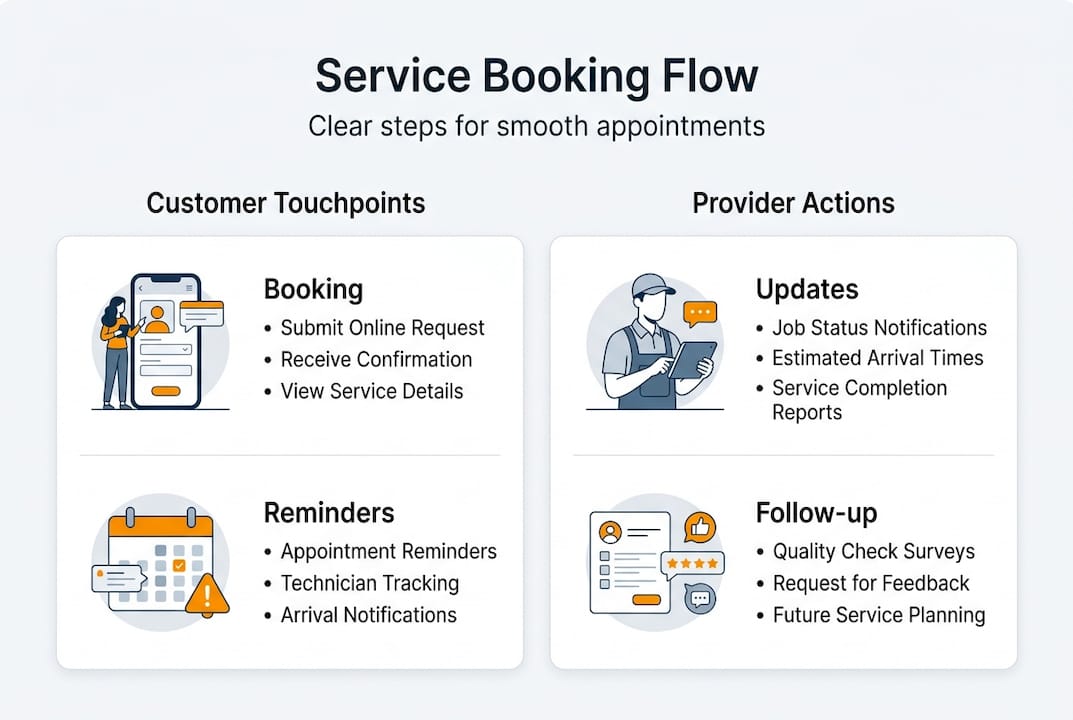
A solid practical service management guide can help you understand what to expect from professional providers. And if you are exploring digital service platforms, look for ones that have all of these communication features built in.
The goal is simple: you should never have to wonder what is happening with your appointment. A good provider, or a good platform, makes that the default.
What most guides miss about communication in home service booking
Most articles on this topic stop at "send reminders." That advice is not wrong. It is just incomplete.
After observing hundreds of home service bookings, we have seen a clear pattern. The appointments that go smoothly are not always the ones with the most automated messages. They are the ones where the homeowner felt informed and respected throughout the process. That is an emotional outcome, not just a logistical one.
Technology handles the mechanics. But the tone of a message, the timing of an update, and the simple act of saying "we are on our way and looking forward to helping you today" creates a feeling of trust that no reminder alone can replicate. Consistency matters enormously here. A provider who communicates well once and then goes silent builds suspicion, not confidence.
We believe that all-in-one service solutions work best when they are designed around the homeowner's experience, not just the provider's workflow. The best communication strategy is one that makes you feel like someone is genuinely looking out for your home.
Streamline your next booking with the right tools
You now have a clear picture of what great communication looks like in home service booking. The next step is finding a platform that puts all of it into practice for you automatically.
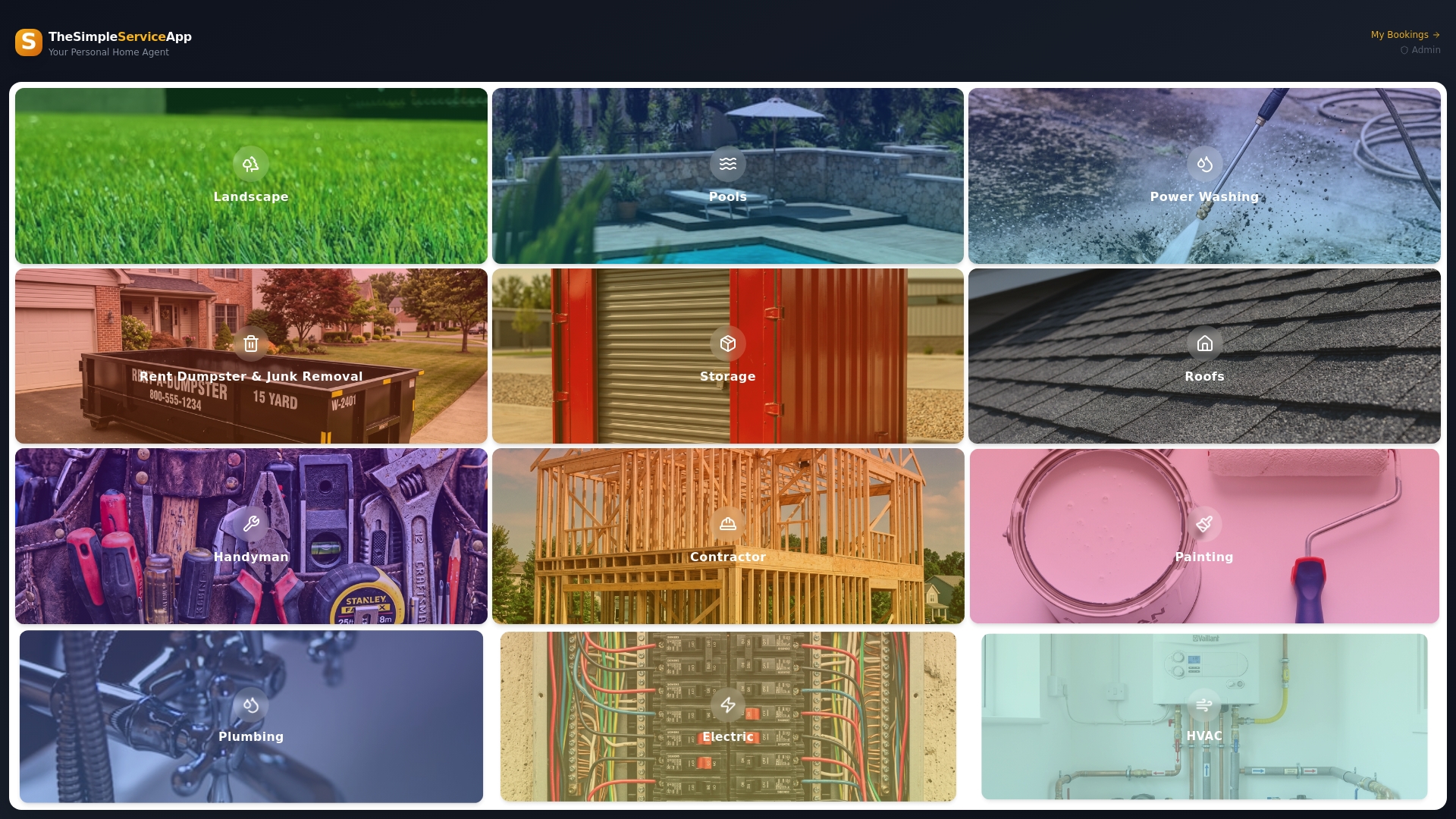
At The Simple Service App, we act as your personal home agent. We handle the booking, the reminders, the follow-ups, and the coordination so you never have to chase anyone down. Every strategy covered in this guide is built into how we work. If you are ready to experience digital service solutions that actually put communication first, we are ready to help you get started today.
Frequently asked questions
What are the key communication steps in home service booking?
The main steps are instant booking confirmation, timely reminders 24 to 48 hours before, on-my-way notifications, and post-service follow-ups. Multi-channel automated strategies significantly reduce no-shows and keep both parties aligned.
Which communication channel is best for service reminders?
SMS is the most effective channel for reminders because it has a 98% open rate and is immediately visible. Automated SMS and email together cover both urgency and detail.
How do updates and portals prevent difficult customer situations?
Portals and real-time status updates set clear expectations before problems arise. Proactive communication systems prevent 80% of customer difficulties by addressing uncertainty before it becomes frustration.
How far in advance should I book a home service appointment?
For the best outcomes, book no more than 2 to 4 weeks ahead. Advance bookings beyond that window raise the risk of cancellations and no-shows considerably.