
TL;DR:
- Understanding your grass type and seasonal needs is essential for an effective lawn care routine.
- Organizing tools and building a structured calendar help ensure timely, consistent lawn maintenance.
- Continually monitoring lawn health and adjusting your workflow leads to better long-term results.
Keeping up with lawn care feels impossible when you're mowing one week, forgetting fertilizer the next, and watering at the wrong time altogether. Most homeowners don't have a bad lawn because they're lazy. They have a bad lawn because their tasks are scattered, poorly timed, and disconnected from what their specific grass actually needs. A structured workflow changes all of that. This guide walks you through assessing your lawn, organizing your tools and calendar, executing a repeatable routine, and verifying results so you spend less time guessing and more time enjoying a yard that actually looks good.
Table of Contents
- Assess your lawn: Grass type and seasonal needs
- Gather tools and set up your lawn care calendar
- Execute your workflow: Step-by-step lawn care routine
- Verify results and adjust your workflow
- Why most lawn care workflows fail (and how to guarantee results)
- Simplify lawn care with digital tools
- Frequently asked questions
Key Takeaways
| Point | Details |
|---|---|
| Know your grass type | Identifying cool- or warm-season grass is the cornerstone of a custom lawn workflow. |
| Calendar is your ally | Scheduling tasks using a calendar is the surest way to keep your workflow efficient and consistent. |
| Step-by-step wins | Following a structured routine reduces missed tasks and leads to healthier turf over time. |
| Adapt and verify | Regularly checking and updating your approach yields continual improvement for your lawn. |
Assess your lawn: Grass type and seasonal needs
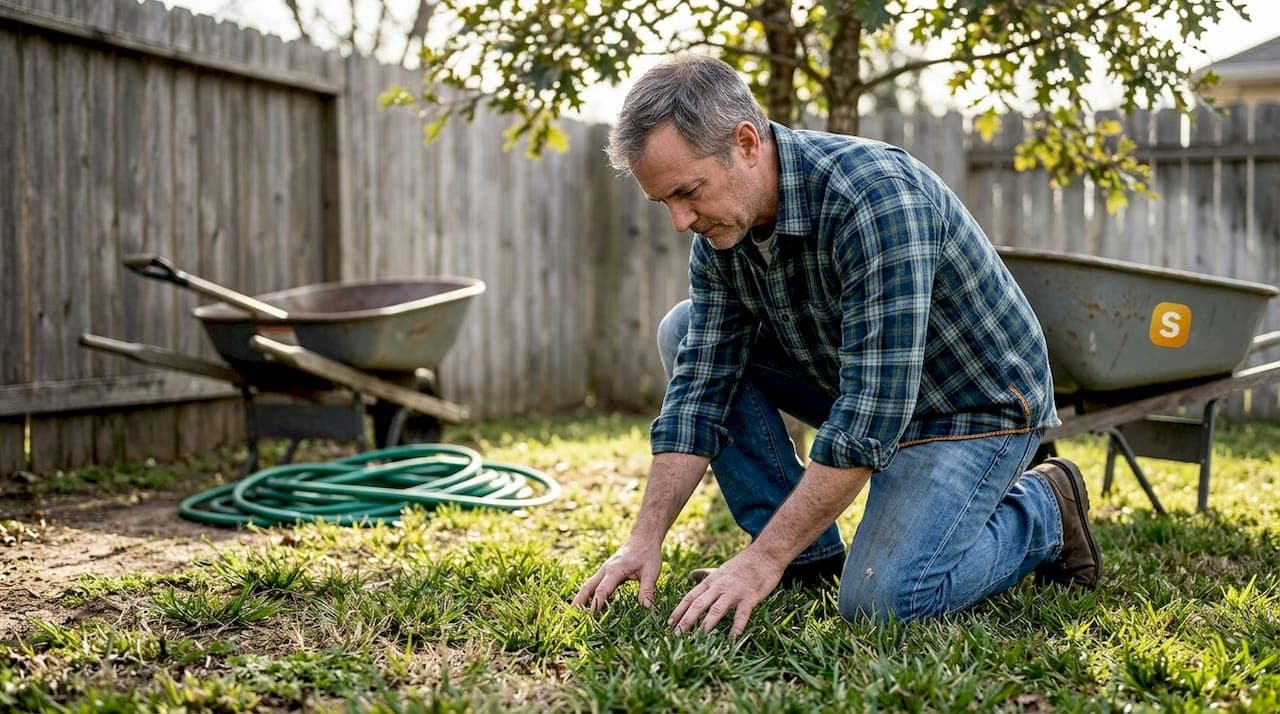
Now that you've set your intention for a healthy lawn, let's start by understanding what you're working with. Before you buy a single bag of fertilizer or schedule your first mow, you need to know your grass type. This one step changes everything about how your workflow is structured.
The simplest way to identify your grass is to observe when it looks its best. Cool-season grasses thrive in spring and fall when temperatures sit between 60 and 75 degrees Fahrenheit. Warm-season grasses hit their stride in summer, preferring temperatures between 80 and 95 degrees. If your lawn looks lush in May and October but turns brown in July, you're almost certainly dealing with a cool-season variety.
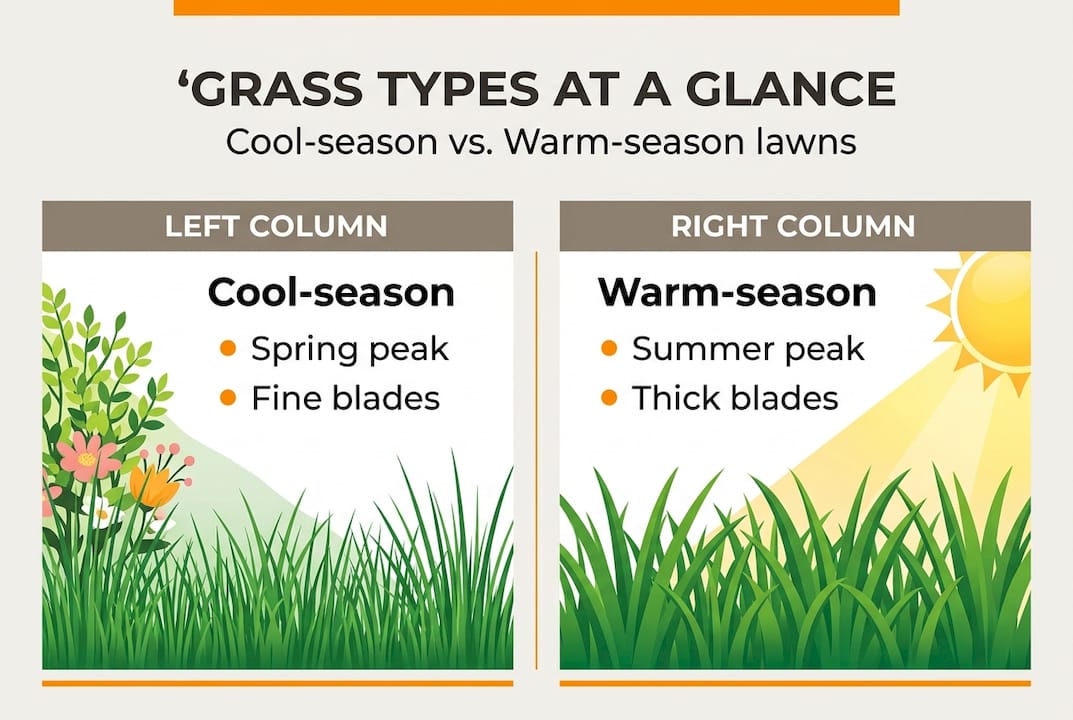
Your climate zone is just as useful as visual observation. Homeowners in the South and Southeast are almost always dealing with warm-season grasses. Bermuda and Zoysia dominate those regions and peak during the hottest months of the year. Northern homeowners typically manage Kentucky Bluegrass, Tall Fescue, or Perennial Ryegrass.
Here's a quick breakdown of common U.S. grass types and where they grow best:
- Kentucky Bluegrass: Northern states, cool and moist climates
- Tall Fescue: Transition zones, tolerates heat and cold
- Perennial Ryegrass: Pacific Northwest and Northeast
- Bermudagrass: Southeast and Southwest, full sun
- Zoysiagrass: Southeast, tolerates shade better than Bermuda
- St. Augustinegrass: Gulf Coast states, humid and warm
| Factor | Cool-season grasses | Warm-season grasses |
|---|---|---|
| Peak growth | Spring and fall | Summer |
| Ideal temp | 60 to 75°F | 80 to 95°F |
| Fertilize window | Early fall, early spring | Late spring, summer |
| Dormancy period | Summer heat | Winter cold |
| Common regions | North, Pacific NW | South, Southwest |
Once you know your grass type, your entire workflow calendar becomes easier to build. You'll know when to fertilize, when to aerate, and when to back off. A great companion step is running a soil test early in the season. It tells you exactly what nutrients are missing so you're not throwing money at products your lawn doesn't need.
Pro Tip: Order a soil test from your local cooperative extension office before spring kicks in. Results take about two weeks, and they give you a precise fertilization plan that saves both time and money. You can also pair this with your spring cleaning checklist to get the whole property dialed in at once.
Gather tools and set up your lawn care calendar
Once you know your grass and its schedule, it's time to get organized with the right equipment and task management tools. Having the right tools on hand before the season starts means you're never scrambling mid-task.
For most homeowners, the core toolkit includes a reliable push or self-propelled mower, a broadcast spreader for fertilizer and seed, a garden hose or irrigation system, a rake, edging shears, and a hand trowel. Power tools like a string trimmer and leaf blower round things out nicely. You don't need everything at once, but gaps in your toolkit lead to skipped tasks.
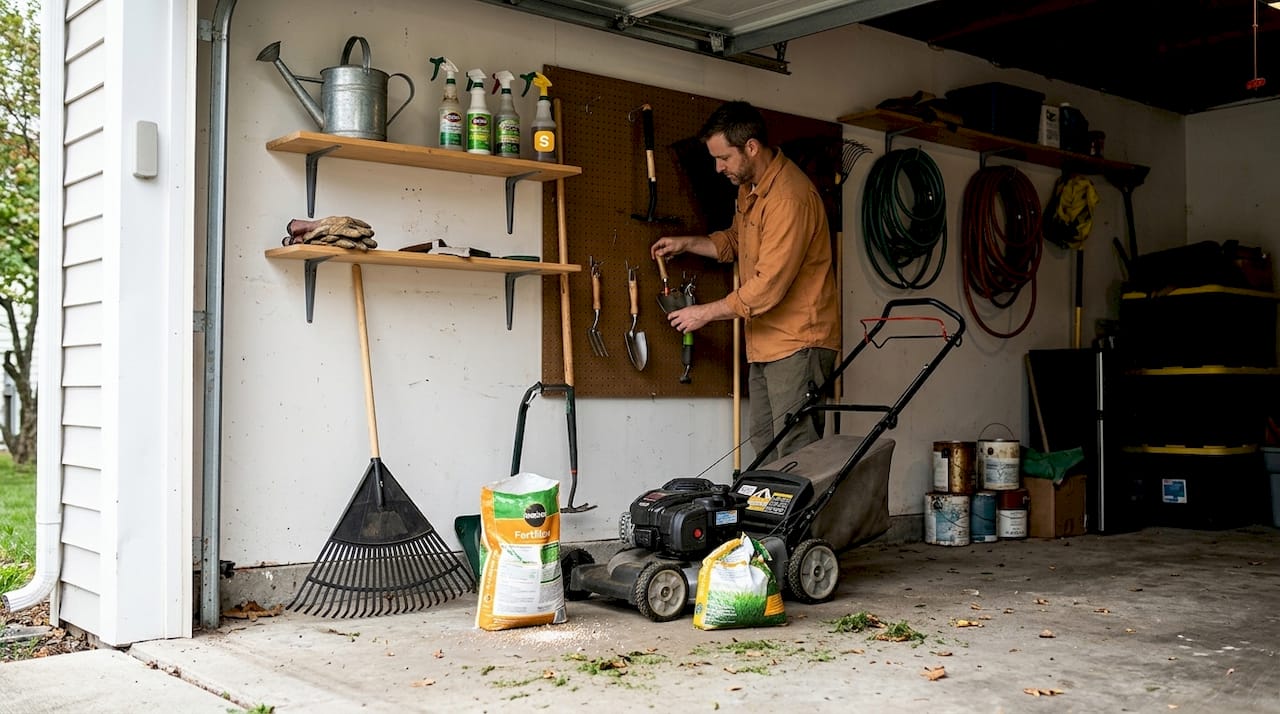
Once your tools are sorted, the calendar is where your workflow really takes shape. A structured workflow reduces wasted effort and missed tasks, which directly improves turf quality over time. The question is whether you use a digital app, a paper planner, or a spreadsheet.
| Method | Pros | Cons |
|---|---|---|
| App-based | Automated reminders, easy to update | Requires a device and data |
| Paper checklist | No tech needed, tactile and simple | Easy to lose, no reminders |
| Spreadsheet | Customizable, shareable | Manual entry, no push alerts |
Digital tools win for most homeowners because they send reminders automatically. You can learn more about scheduling services for home maintenance and how it reduces the mental load of keeping track. For a broader view, the approach mirrors what works in annual home maintenance planning.
Here's how to set up a basic lawn care calendar in four steps:
- List every task your lawn needs across the full year: mowing, fertilizing, aerating, overseeding, and weed control.
- Assign each task to a season based on your grass type's peak growth windows.
- Set recurring reminders weekly for mowing during peak season, monthly for fertilizer checks.
- Build in buffer days so weather delays don't throw off the whole schedule.
Pro Tip: Group tasks by season rather than by week. A seasonal block approach keeps you from over-scheduling spring and under-delivering in fall, which is when cool-season lawns need the most attention.
Execute your workflow: Step-by-step lawn care routine
With your calendar and tools ready, it's time to get hands-on and put your workflow into action. Execution is where most homeowners either build momentum or fall apart. The key is following a repeatable sequence.
Here's the core workflow for a standard lawn care season:
- Early spring: Rake debris, apply pre-emergent weed control, test soil if not done in fall.
- Mid-spring: Begin mowing once grass reaches one-third above your target height. Fertilize cool-season grasses.
- Late spring: Increase watering frequency. Spot-treat weeds. Edge borders.
- Summer: For warm-season grasses, this is peak mowing and fertilization time. Cool-season lawns need less intervention.
- Early fall: Aerate cool-season lawns. Overseed thin areas. Apply fall fertilizer.
- Late fall: Final mow slightly shorter. Winterize irrigation. Clear leaves promptly.
Cool-season grasses need more frequent mowing in spring and fall, while warm-season varieties require it most during summer. Matching your mowing schedule to this rhythm prevents scalping and stress.
The three most common execution mistakes homeowners make:
- Mowing too short: Cutting below one-third of the blade height stresses the grass and invites weeds.
- Watering at the wrong time: Evening watering promotes fungal growth. Water in the early morning instead.
- Missing fertilization windows: Applying fertilizer outside the growth window wastes product and can burn roots.
Bundling tasks saves real time. When you mow, edge, and blow debris in one session rather than three separate trips, you cut your outdoor time significantly. Setting up service reminders keeps you on track without having to remember everything yourself. If you want to extend this logic to your whole home, smart household routines work the same way.
If you're working with family members or a lawn service, assign specific tasks clearly. Confusion about who handles what leads to double work or missed steps. A shared digital calendar solves this instantly.
Verify results and adjust your workflow
With the main routine in play, ongoing improvement and validation are key for continued lawn success. A workflow that never gets reviewed becomes stale. Your lawn gives you constant feedback. You just have to know how to read it.
Signs of a healthy lawn:
- Even color across the full surface with no yellow or brown patches
- Consistent thickness without bare spots or thin areas
- Firm soil that doesn't feel spongy or compacted underfoot
- Low weed presence with grass crowding out invaders naturally
- Upright blade posture after mowing, not lying flat
Signs your workflow needs adjustment:
- Yellowing in patches (possible nutrient deficiency or overwatering)
- Bare spots that don't recover after seeding
- Weeds spreading despite pre-emergent application
- Grass going dormant earlier than expected
"Documenting adjustments leads to continual improvement. A lawn journal doesn't have to be fancy. Even a few notes on your phone after each session builds a record that helps you make smarter decisions next season."
Adapting your workflow timing based on how your grass responds ensures long-term lawn health. This isn't about perfection. It's about getting a little better each season.
If you use a lawn service, ask them for written notes after each visit. Good pros will tell you what they observed and what they adjusted. You can also use an app to manage service appointments and keep all those notes in one place. For a deeper look at how to work with service providers, the service management guide lays it out clearly.
When results plateau despite consistent effort, that's usually the signal to bring in a professional for a one-time assessment. They can spot compaction, pH imbalance, or pest pressure that's invisible to the untrained eye.
Why most lawn care workflows fail (and how to guarantee results)
Here's the uncomfortable truth: most lawn care workflows fail not because homeowners are inconsistent, but because they're following a template that was never built for their yard. Generic schedules from YouTube videos or bag labels assume average conditions. Your lawn isn't average. It has a specific soil type, microclimate, shade pattern, and drainage situation that no template accounts for.
The homeowners who get the best results treat their workflow as a living document. They adjust mowing height after a dry stretch. They push fertilization back two weeks when a late frost hits. They notice that the northeast corner of the yard always stays wet and stop watering it as much. That kind of observation-driven flexibility is what separates a great lawn from a frustrating one.
Cookie-cutter approaches also ignore year-to-year variation. A workflow that worked perfectly in 2025 might need tweaking in 2026 because of a wetter spring or a hotter August. Building in a seasonal review makes this natural rather than reactive.
Pro Tip: At the end of every season, spend 15 minutes reviewing what worked and what didn't. Write it down. This single habit compounds over time and makes every future season easier. Pairing this with a solid home service booking workflow keeps the whole property on track, not just the lawn.
Simplify lawn care with digital tools
With the right workflow in place, technology can make maintenance nearly effortless. Managing a lawn care schedule manually means relying on memory, and memory is unreliable when life gets busy.

The Simple Service App acts as your personal home agent, helping you book, schedule, and manage recurring lawn care tasks all from one place. You get automated reminders, a single dashboard for all your home services, and access to a network of vetted contractors who can handle what you'd rather not. If you want to see how home service apps can reduce the friction of managing your property, it's worth exploring what the platform offers. Less guesswork, fewer missed tasks, and a lawn that actually reflects the effort you're putting in.
Frequently asked questions
How do I know if my grass is cool-season or warm-season?
Cool-season grasses peak in spring and fall, while warm-season varieties thrive in summer heat. Observe when your lawn looks fullest and greenest to identify which category you're in.
How often should I adjust my lawn care workflow?
Review your workflow at least once per season based on visible lawn health and weather patterns. Adapting to grass response is what keeps results improving year over year.
What are the essential tools for DIY lawn care?
You'll need a mower, broadcast spreader, watering hose or irrigation system, rake, and basic hand tools to cover most routine tasks without hiring out.
Is a digital calendar better than a paper checklist for lawn care?
A digital calendar sends automatic reminders and is harder to lose, making it more reliable for most homeowners. A paper checklist works fine if you check it consistently every week.