
TL;DR:
- Proper triage and preparation can significantly reduce emergency response time and costs.
- Clear communication and documentation improve service efficiency and help prevent delays.
- Building routine planning habits beforehand minimizes the impact of home emergencies.
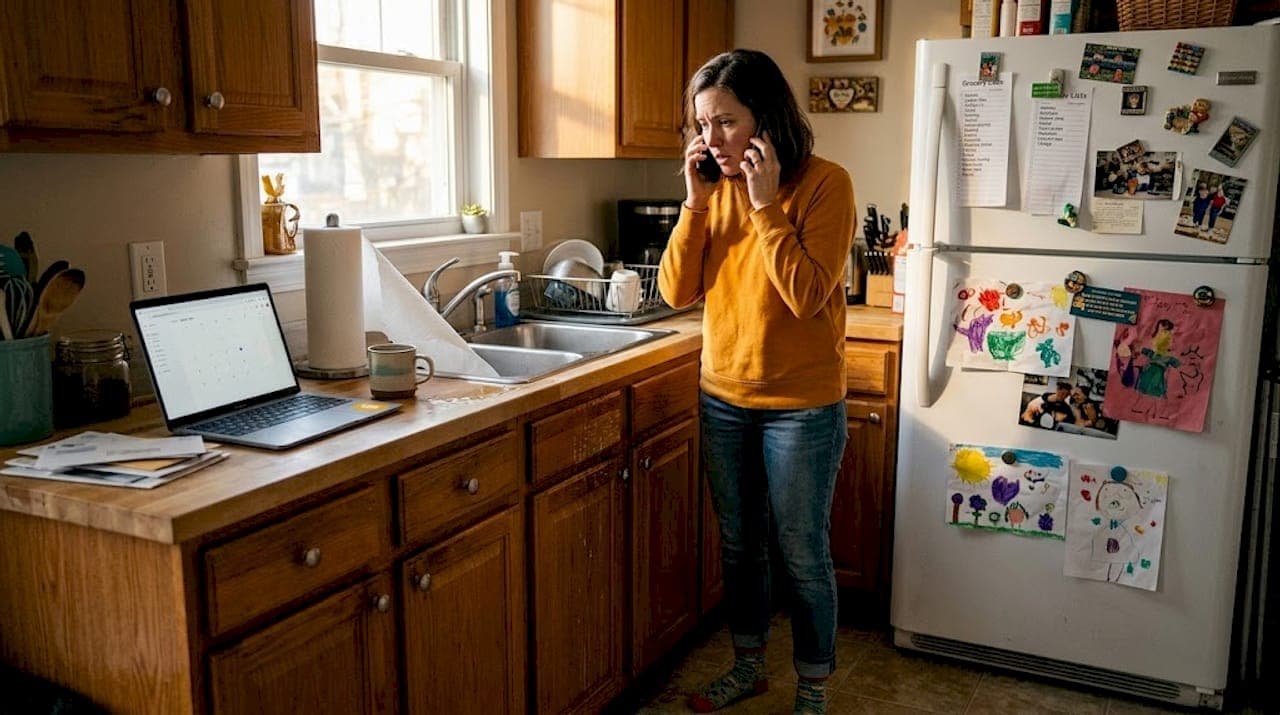
A pipe bursts at 11 p.m. Your HVAC dies on the hottest day of the year. A circuit breaker trips and half your house goes dark. These moments hit fast, and without a clear plan, most homeowners freeze, make rushed calls, and end up overpaying or waiting far too long. The truth is, managing urgent home service requests does not have to feel like a fire drill every single time. With the right workflow in place, you can move from panic to resolution in a fraction of the time. This guide walks you through every step, from spotting the real urgency to following up after the job is done.
Table of Contents
- Assessing urgent home service needs quickly
- Preparing for service: Tools, information, and communication
- Executing your workflow: Step-by-step process for urgent requests
- Troubleshooting and avoiding common workflow mistakes
- Why real efficiency means planning before emergencies strike
- Take control of urgent requests with streamlined digital tools
- Frequently asked questions
Key Takeaways
| Point | Details |
|---|---|
| Quick assessment is vital | Efficient workflows start by correctly identifying and prioritizing urgent requests. |
| Preparation speeds resolution | Gathering clear information and communicating urgency helps providers respond faster. |
| Digital tools drive efficiency | Using apps and digital workflows reduces delays in managing urgent home services. |
| Avoid workflow mistakes | Common errors like incomplete information and lack of feedback lead to budget overruns. |
| Proactive routines pay off | Integrating workflows into regular home management ensures rapid action when emergencies strike. |
Assessing urgent home service needs quickly
Not every home problem is a true emergency. That sounds obvious, but in the moment, a dripping faucet can feel just as stressful as a flooded basement. The first skill to build is fast, accurate triage. Service optimization starts by correctly identifying the urgency of a request, and that single habit can save you hours and hundreds of dollars.
Start by sorting issues into categories. The most common urgent home service types include:
- Plumbing: Active leaks, burst pipes, sewage backups, no hot water
- Electrical: Tripped breakers that won't reset, exposed wiring, complete power loss
- HVAC: Total system failure during extreme weather, gas smell near the unit
- Structural: Roof damage after a storm, a door or window that won't close and lock
- Appliance: Gas stove malfunction, water heater failure
Once you know the category, ask yourself three quick questions. Is there an immediate safety risk? Is the issue getting worse by the hour? Will waiting 24 to 48 hours cause significant property damage? If you answer yes to any of these, it is urgent. If all three are no, you likely have time to schedule urgent requests during normal business hours, which almost always means lower costs.
Before you pick up the phone, collect the basics. Know your address, the age of the affected system, your home warranty details if applicable, and a short description of when the problem started.
| Issue type | Immediate action needed | Can wait 24-48 hours |
|---|---|---|
| Burst pipe or active flood | Yes | No |
| Slow drain or minor drip | No | Yes |
| Full power outage | Yes | No |
| Single outlet not working | No | Yes |
| HVAC failure in extreme heat/cold | Yes | No |
| HVAC making odd noise | No | Yes |
Pro Tip: Keep a digital checklist on your phone with your home's key system details, model numbers, and warranty contacts. Apps like Google Keep or Notion work great for this. When urgency hits, you won't be scrambling for information.
Preparing for service: Tools, information, and communication
With the urgency level confirmed, your next move is preparation. This step is where most homeowners lose time. They call a provider without the right details, get put on hold, and repeat themselves three times to three different people. That cycle is avoidable.
Gather these essentials before making any call:
- Full property address and unit number if applicable
- Clear description of the issue (what you see, hear, or smell)
- When the problem started and whether it is getting worse
- Urgency level (immediate safety risk vs. significant inconvenience)
- Your preferred contact method and availability window
- Any relevant photos or short video clips of the issue
Photos are underrated. A 10-second video of water spraying under your sink tells a plumber more than a 5-minute phone call. It also helps providers bring the right parts on the first visit, which cuts resolution time significantly.
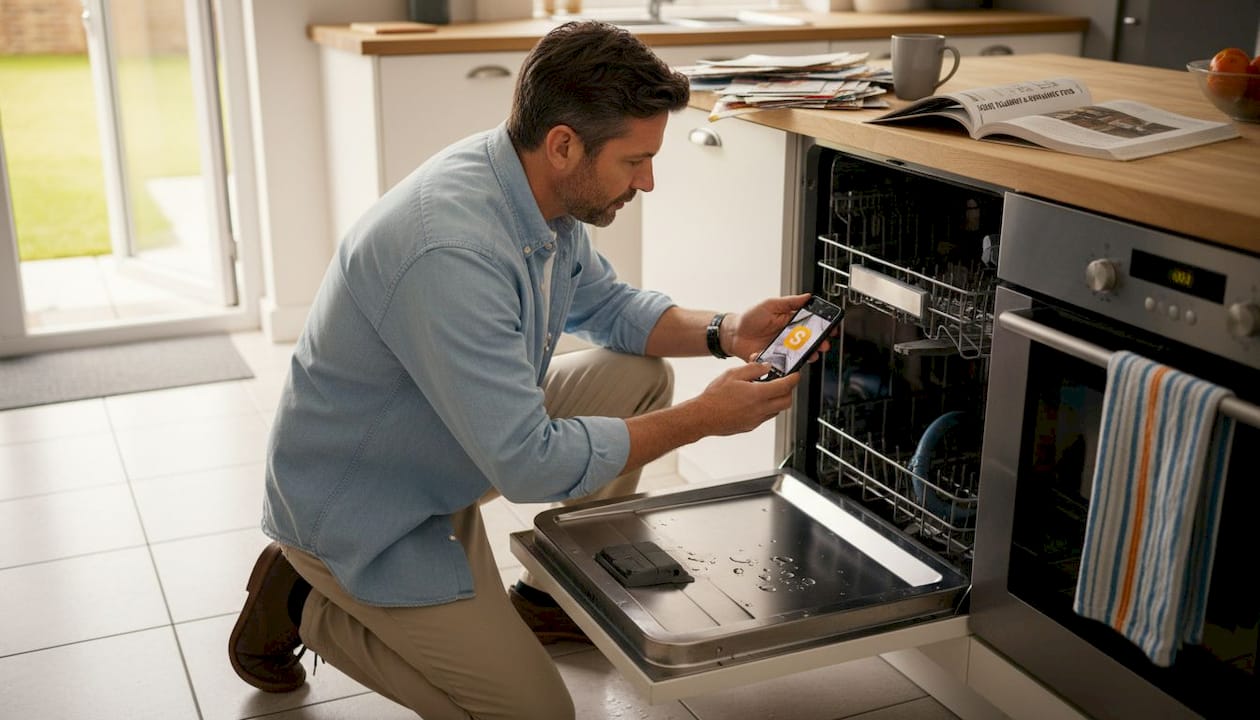
Smart communication improves outcomes during urgent home service bookings, and that starts with being specific. Instead of saying "my heat is broken," say "my gas furnace stopped producing heat at 6 a.m. this morning, the thermostat reads 58 degrees, and I have two young children at home." That context moves you up the priority list.
| Information to have ready | Why it matters |
|---|---|
| Address and access instructions | Prevents delays on arrival |
| System age and model number | Helps technician prepare parts |
| Photos or video of the issue | Reduces diagnostic time |
| Urgency level and safety risk | Determines scheduling priority |
| Insurance or warranty details | May cover costs or change process |
Pro Tip: Create a dedicated "emergency home folder" on your phone or in a physical binder. Store appliance manuals, warranty documents, contractor contacts, and your home insurance policy number in one place. You will thank yourself the next time something goes wrong at midnight.
When you communicate urgent requests clearly and early, you give providers the best chance to respond fast. Vague requests get treated as low priority, even when they are not.
Executing your workflow: Step-by-step process for urgent requests
Preparation is done. Now it is time to move. A reliable execution workflow keeps you in control and prevents the most common frustration: not knowing what is happening or when.
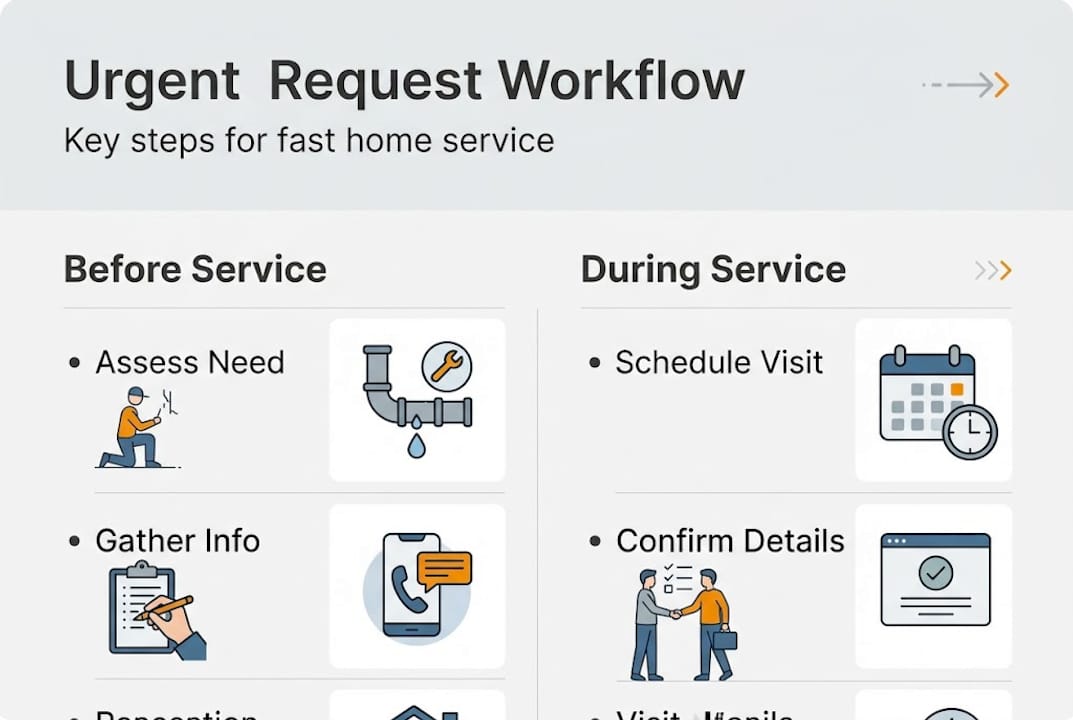
Follow these steps every time:
- Submit the request with all collected details through a digital platform or direct call. Include photos and urgency level.
- Confirm receipt by getting a ticket number, booking confirmation, or written acknowledgment from the provider.
- Verify the timeline by asking for an estimated arrival window and the name of the technician assigned.
- Track progress using app notifications, SMS updates, or a direct callback agreement with the provider.
- Prepare your home before the technician arrives: clear access to the affected area, secure pets, and note any safety hazards.
- Verify completion by reviewing the work with the technician before they leave. Ask for a written summary of what was done.
- Document the outcome with photos and save any receipts or service reports to your emergency home folder.
Scheduling apps streamline urgent repairs and reduce time-to-resolution by giving you real-time visibility into your request status. Homeowners who use home service apps for booking and tracking report significantly less back-and-forth with providers and faster overall resolution times.
Pro Tip: Enable push notifications on any home service app you use. A single alert that your technician is 20 minutes away saves you from hovering by the door for two hours.
The numbered workflow above may look simple, but most homeowners skip steps 2, 6, and 7. Skipping confirmation means you have no proof of the request. Skipping verification means problems get missed. Skipping documentation means you have nothing to reference if the issue returns.
Troubleshooting and avoiding common workflow mistakes
Even with a solid plan, things go sideways. Knowing the most common mistakes in advance lets you sidestep them before they cost you time or money.
The top workflow errors homeowners make include:
- Incomplete information: Calling without photos, model numbers, or a clear issue description forces providers to ask follow-up questions, which adds delays.
- Unclear urgency: Saying "it's kind of urgent" does not help dispatchers prioritize your job. Be direct about safety risks.
- Missed confirmations: Assuming your request was received without getting written proof leads to no-shows and wasted days.
- Single-provider dependency: Relying on one contractor with no backup means you are stuck if they are unavailable.
- No follow-up plan: Closing the loop after the job is done prevents repeat issues and builds a record for future reference.
Fixes for each of these are straightforward. Use a checklist before every call. State your urgency level explicitly. Always ask for a confirmation number. Keep a short list of two or three vetted providers per service category. And after every job, spend five minutes writing down what worked and what did not.
Nearly 47% of home service projects go over budget due to poor workflow management. That number drops sharply when homeowners use structured processes and clear communication from the start.
Feedback is also a tool, not just a courtesy. After each urgent job, note what slowed things down. Did the provider arrive without the right parts? Did you forget to mention a key detail? Use that information to refine your process. Homeowners who treat workflow mistakes as learning opportunities and actively apply using feedback to improve their process resolve future issues faster and with fewer surprises.
Why real efficiency means planning before emergencies strike
Here is a perspective that most guides skip: the best urgent response is one you mostly set up weeks before the emergency happens. Conventional wisdom treats home emergencies as random, unpredictable events that require reactive solutions. We disagree.
The homeowners who handle urgent requests with the least stress are not the ones who react fastest in the moment. They are the ones who built smart routines and planning habits into their regular schedule. They already have their emergency folder ready. They already know their two backup plumbers. They already have a booking app installed with their home details saved.
The uncomfortable truth is that "urgent" is often just "unprepared" in disguise. A water heater that fails without warning usually showed signs for weeks. An HVAC system that dies in July often skipped its spring checkup. When you layer workflow habits into your everyday routine, real emergencies become much rarer, and the ones that do hit get resolved faster because your system is already running.
Pro Tip: After every urgent episode, schedule a 15-minute workflow review. Ask what you would do differently and update your emergency folder accordingly. That habit compounds over time into genuine home management confidence.
Take control of urgent requests with streamlined digital tools
You now have a full workflow from triage to follow-up. The next step is putting it into practice with tools that do the heavy lifting for you. Managing urgent home service requests does not have to mean juggling multiple calls, chasing confirmations, and hoping for the best.
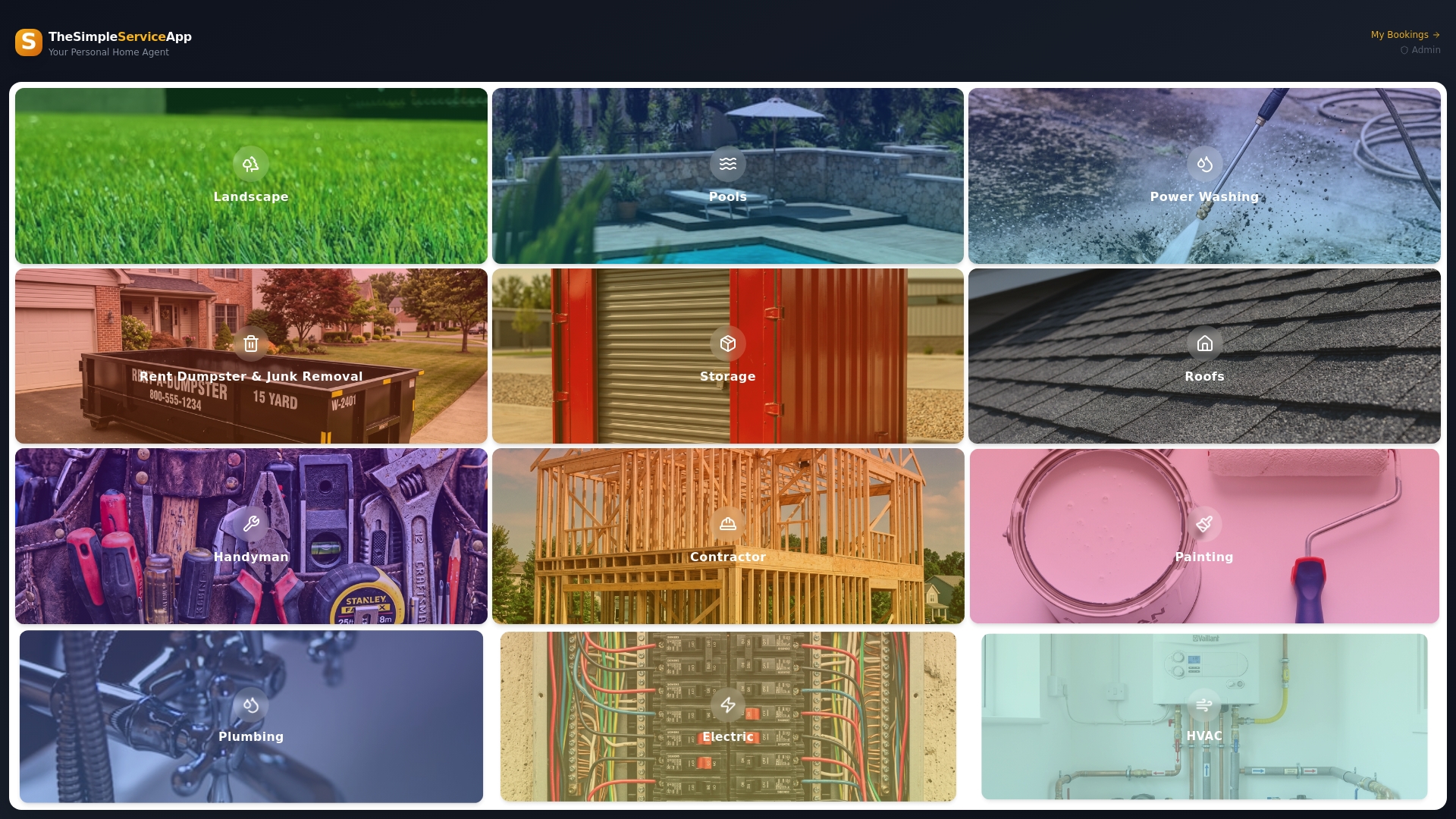
At Simple Service App, we act as your personal home agent. We negotiate, book, and manage your home services from one place, so you are never starting from scratch during a stressful moment. Whether it is a burst pipe at midnight or an HVAC failure on a Friday afternoon, our network of contracting consultants is ready to move fast. Explore digital workflow tools for urgent requests and see how much simpler urgent home service management can be when everything is handled in one place.
Frequently asked questions
What counts as an urgent home service request?
Urgent requests include issues that threaten safety, property, or comfort, such as plumbing leaks, power outages, or HVAC failures. Correctly identifying urgency is the first step in any effective home service workflow.
How can I make sure urgent requests are prioritized?
Provide complete information, state your urgency level clearly, and use digital tools that flag high-priority bookings for faster dispatch. Scheduling apps reduce delays and give providers the context they need to act quickly.
What if my service request goes over budget?
Clear communication, documented workflows, and active feedback loops all reduce the risk of budget overruns. 47% of projects exceed budget due to workflow errors, and structured processes are the most reliable fix.
Should I document all home issues before contacting a service provider?
Yes, photos and written details speed up resolution and prevent miscommunication between you and the technician. Smart communication strategies consistently improve outcomes for urgent home service bookings.