

TL;DR:
- Prioritize replacing high-usage appliances like refrigerators, washers, and dishwashers for energy savings.
- Choose ENERGY STAR certified models with reliable repair history to ensure long-term value.
- Leverage stacking incentives, rebates, and proper installation to maximize savings and efficiency.
Choosing which appliances to upgrade first is one of the trickiest decisions a homeowner faces. You want to save money, but you don't want to replace something that still has years of life left. Here's the thing: refrigerators over 15 years old use about 35% more energy than current ENERGY STAR models. That's not a small gap. The right upgrades can lower your utility bills, improve your home's comfort, and even increase resale value. In this article, we'll walk you through exactly which appliances to prioritize, how to pick the best models, and how to use rebates and incentives to keep costs manageable.
Table of Contents
- How to prioritize your appliance upgrades
- Selecting the most energy-efficient models
- Leverage incentives and rebates for maximum savings
- Installation, maintenance, and modern options
- Our expert take: What truly matters when upgrading appliances
- Ready to simplify your next appliance upgrade?
- Frequently asked questions
Key Takeaways
| Point | Details |
|---|---|
| Prioritize main energy hogs | Replace refrigerators and laundry appliances first for the biggest savings. |
| Choose ENERGY STAR models | Certified appliances cut energy use by 10 to 50 percent compared to older units. |
| Stack rebates and credits | Leverage tax credits and rebates to reduce upgrade costs, but act before programs expire. |
| Tune up before you buy | Simple maintenance and the right installation can save energy even if you don’t replace right away. |
| Invest smartly for lasting value | Focus on reliability and real efficiency, not just trendy features and flashy displays. |
How to prioritize your appliance upgrades
Not every old appliance deserves to be replaced right away. The key is focusing on the ones that run constantly or get heavy daily use. Those are the appliances quietly draining your wallet every single month.
Start by taking a simple inventory. Walk through your home and list every major appliance, its age, and how often you use it. Then apply this logic: the older and more frequently used it is, the higher it ranks on your replacement list. Upgrade high-usage appliances first, specifically refrigerators (which run 24/7), washers, dryers, and dishwashers. These four account for a massive share of household energy consumption.
Here's a practical step-by-step approach to help you prioritize:
- List every major appliance in your home along with its age and estimated weekly usage hours.
- Flag anything older than 10 to 15 years, especially refrigerators, washing machines, and HVAC-related units.
- Check for visible inefficiency signs: frost buildup in the freezer, a dishwasher that takes two cycles, or a dryer that runs longer than 45 minutes per load.
- Review your utility bills for the past 12 months. A sudden spike often points to an aging appliance losing efficiency.
- Research replacement ROI (return on investment) before buying. Some appliances pay back their purchase price in energy savings within just a few years.
Sizing matters too. Many homeowners replace a refrigerator with a model that's too large for their household. The ideal refrigerator size for most families is 16 to 20 cubic feet. Going bigger means more energy use without added benefit. Think about what you actually need, not what looks impressive in the showroom.
For saving on energy bills, a DIY energy audit is a smart first move. Check door seals on your fridge by closing a dollar bill in the door. If it slides out easily, the seal is worn. Look behind your dryer for a kinked vent hose. These quick checks can reveal whether a repair is all you need or if a full replacement makes more sense. You can also explore top home services that include professional energy assessments. The EPA energy guidance offers additional tools to measure your home's environmental impact before and after upgrades.
Pro Tip: Before replacing any appliance, spend 30 minutes doing a basic inspection. Cleaning coils, replacing door gaskets, or unclogging a vent can sometimes extend an appliance's life by two to three years.
Selecting the most energy-efficient models
With your priority list ready, it's time to choose the right models. This is where a lot of homeowners get overwhelmed by spec sheets and marketing claims. Let's cut through the noise.
The two labels you need to understand are ENERGY STAR and EnergyGuide. ENERGY STAR is a certification that means the appliance meets strict federal efficiency standards. ENERGY STAR certified appliances use 10 to 50% less energy than standard models. The EnergyGuide label, that bright yellow sticker, tells you the estimated annual energy cost in dollars and the appliance's kWh usage per year. Use both together when comparing models.
Here's what to look for when shopping:
- Annual kWh usage: Lower is better. Compare this number across similar-sized models.
- Estimated annual cost: The EnergyGuide label shows this based on average electricity rates.
- Rebate eligibility: Some models qualify for utility rebates that non-certified models don't.
- Cycle options: Washers with cold-water cycles and dishwashers with eco modes save extra energy without sacrificing performance.
- Smart features: Only worth it if they genuinely change your behavior. A smart washer that sends alerts is convenient. But it won't cut your bill significantly on its own.
The upfront cost of an efficient model is usually higher, but the math works in your favor over time. A new ENERGY STAR fridge saves $83 over 10 years for a top-freezer model, $272 for a bottom-freezer, and $340 for a side-by-side compared to a 2016 model. That's real money, especially when stacked with rebates.
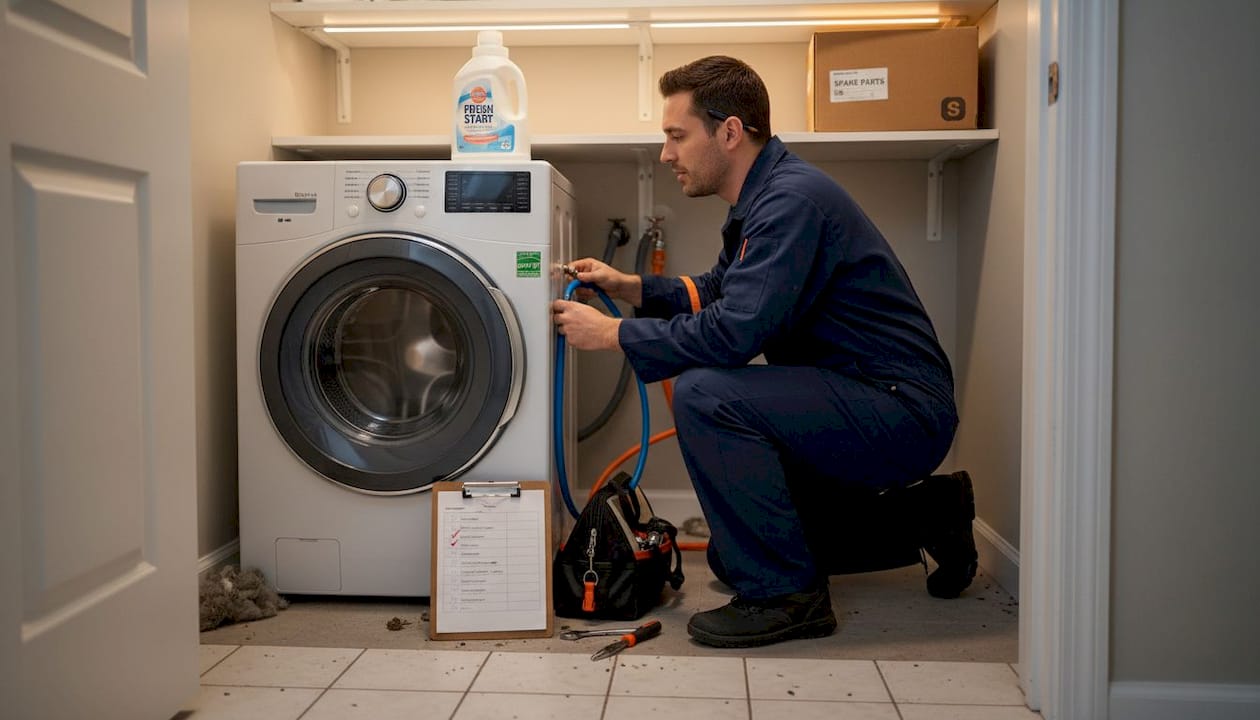
For cutting your utility bills over the long run, prioritize models with strong repair records. A highly efficient appliance that breaks down in year three isn't a bargain. Check manufacturer reliability ratings and look at repair cost histories before committing. Pairing efficient appliances with smart home routines can also amplify your savings. Running your dishwasher and washer during off-peak hours, for example, can lower your electricity rate in many utility zones. Use this energy-efficient selection guide to compare specific models before you buy.
Leverage incentives and rebates for maximum savings
Finding the right appliance is only half the battle. Knowing how to pay less for it is the other half. The good news: there are more financial incentives available right now than most homeowners realize.
Federal tax credits are the biggest opportunity. Tax credits up to $600 per appliance (30% of the cost) are available, with a $1,200 total annual cap for qualifying home energy upgrades. Some of these rebate programs have expiration dates tied to end-of-2025 funding cycles, so acting in 2026 may mean working with updated program rules. Always verify current availability with your tax advisor.
Beyond federal credits, here's a breakdown of where to look:
| Incentive type | Typical value | Where to apply |
|---|---|---|
| Federal tax credit | Up to $600/appliance | IRS Form 5695 |
| Utility company rebate | $25 to $200+ | Your utility's website |
| State energy program | Varies by state | State energy office |
| Retailer rebate | $50 to $300 | Point of sale or mail-in |
| Recycling program rebate | $25 to $75 | ENERGY STAR partner |
Stacking incentives is completely legal and very effective. You can claim a federal tax credit, a utility rebate, and a retailer promotion on the same appliance. That combination can cut your out-of-pocket cost by 30 to 50% in some cases.
Don't overlook recycling programs. Recycling old units through ENERGY STAR-approved programs can earn you an additional rebate while keeping harmful refrigerants out of landfills. Many utility companies will even pick up your old appliance for free.
For more tips on cutting energy bills alongside your rebate strategy, bookmark the energy savings checklist from Colorado State University Extension. It's a practical resource for tracking what you've done and what's still on your list.
Pro Tip: Use the ENERGY STAR rebate finder tool at energystar.gov to search incentives by zip code. Local utility programs often offer more money than federal credits and have less paperwork.
Installation, maintenance, and modern options
Buying the right appliance is only step one. How you install it and maintain it determines whether you actually get those promised energy savings.
Before the new appliance arrives, do a quick tune-up on the space it will occupy. Clean coils, check seals, and keep your fridge at 35 to 40°F and your freezer at 0 to 5°F. Level positioning and adequate ventilation around the unit are crucial for efficiency. A fridge pushed tight against a wall with no airflow works harder than it needs to.
For installation, here's what to get right from day one:
- Leave proper clearance: Most refrigerators need at least one inch on each side and two inches at the back.
- Check water line connections: A slow leak behind a fridge or dishwasher can cause mold and structural damage over time.
- Verify electrical requirements: Induction ranges and heat pump dryers often need dedicated circuits. Confirm before delivery day.
- Test the appliance immediately: Run a full cycle or check temperature within the first 24 hours to catch any installation issues early.
Modern appliance options have also changed what's possible without a full kitchen remodel. Counter-depth refrigerators and induction ranges can give your kitchen a high-end look and improved functionality without tearing out cabinets. Induction cooktops heat faster than gas or electric coil and use less energy. Heat pump dryers use roughly 28% less energy than conventional electric dryers and don't require a dedicated vent to the outside in many configurations.
"The best appliance upgrade is one that fits your space, your habits, and your budget, not just the one with the longest feature list."
For ongoing care, follow your appliance maintenance checklist and set service reminders for upkeep so nothing slips through the cracks. The ENERGY STAR Home Upgrade resource also offers guidance on sequencing your upgrades for maximum impact.
Our expert take: What truly matters when upgrading appliances
Here's something most appliance guides won't tell you: the biggest mistake homeowners make isn't buying the wrong brand. It's paying a premium for features that don't change how they actually live.
We've seen homeowners spend an extra $400 on a refrigerator with a built-in touchscreen and Wi-Fi connectivity, then never use either feature after the first week. Meanwhile, they skipped the more reliable, simpler model that would have cost less and lasted longer. Flashy features sell appliances. They don't necessarily make your home run better.
Reliability should rank above almost everything else. An appliance that breaks down twice in five years costs you more in repairs and frustration than a slightly less efficient model that runs quietly for 12 years. Cheap non-ENERGY STAR models may look like a deal upfront, but they fall short for long-term value and reliability. That's a real cost most people underestimate.
Our recommendation: prioritize ENERGY STAR certification, a strong repair history, and the right size for your household. Brand reputation matters, but only when it's backed by actual reliability data, not just marketing. Get home upgrade consultation advice before committing to a major purchase. A 30-minute conversation can save you from a costly mistake.
Ready to simplify your next appliance upgrade?
You now have a clear roadmap: prioritize the right appliances, choose certified efficient models, stack your incentives, and install everything correctly. That's a strategy that saves real money and modernizes your home without unnecessary stress.

At Simple Service App, we make the next step easy. We're your personal home agent, connecting you with contracting consultants who can negotiate, book, and manage your home services all from one place. Whether you need help planning your upgrades or finding the right professionals, you can organize your home upgrades with us today. For more strategies on reducing what you spend each month, explore our further energy-saving tips and put your plan into action.
Frequently asked questions
Which appliances should I upgrade first for maximum energy savings?
Refrigerators, washers, dryers, and dishwashers deliver the highest year-round impact because they run constantly or handle heavy daily loads. Start there before tackling lower-use appliances.
How do I know if replacing my old fridge is worth it?
If your refrigerator is older than 15 years, it likely uses 35% more energy than a current ENERGY STAR model, and replacing it can save you up to $340 over the next decade depending on the style.
What incentives are available for upgrading appliances in 2026?
Federal tax credits cover up to 30% of costs with a $1,200 annual cap, and you may also qualify for utility rebates, state programs, and retailer promotions that can be stacked together.
Are smart appliances always a good investment?
Not always. Smart features add cost without proportional energy savings in most cases, so prioritize reliability and ENERGY STAR ratings before paying extra for connectivity.
How can I keep my new appliances running efficiently?
Follow correct installation guidelines, run routine cleaning on coils and filters, and keep your fridge at 35 to 40°F and your freezer at 0 to 5°F for consistent efficiency.